On this page4 sections
After How Much?, the most frequently asked question is “What makes Polyurea different?”
Many products that are used on RVs were originally intended for other purposes, such as truck beds or industrial roofing. It is important to understand the differences between Poyurea, and other coating materials.
Pure Polyurea
There are two types of polyureas: pure and hybrid. Two drums make up a pure polyurea. The two chemicals will form a new product once they are combined. Pure polyureas can also be made depending on their formula. The formula for RV Roofing was designed to be strong, flexible, and bondable enough to be used on rvs as well as other substrates. Pure polyureas can be used in any weather conditions without affecting the final product. Because of their chemical makeup, pure polyureas can form stronger bonds than hybrids to most substrates. Because the two chemicals combine to create a new product ArmorLinerr, is not affected by humidity or residues on substrates. The more expensive pure polyureas have a slower UV decay rate and are also more expensive. They can be left in the sun for up to 20 years before they start to age.
Hybrid polyurea
A hybrid polyurea also comes in A and B drums. Drums contain a formula and a catalyst. The catalyst side activates the chemical side. It is similar to epoxy. The poly side is formed by this chemical reaction. Because it’s a catalyst reaction, hybrids have different physical properties than pure polyureas. Hybrids have lower flexibility and tear strength. The curing of hybrid polyureas can be affected by low temperatures, humidity, and oils. Hybrid polyureas cannot chemically adhere to surfaces that are not smooth or pitted. Within five years, hybrids will begin to show UV signs.
You can find more information about pure and hybrid and comparison at ArmorThane.
RV roof materials estimator
Enter your roof size and what is mounted on it for a rough shopping list of coating, sealant and tape.
A planning estimate, not a quote. Coverage varies widely by product, surface and application thickness, so check each label and buy a little extra.
Polyureas come in different forms
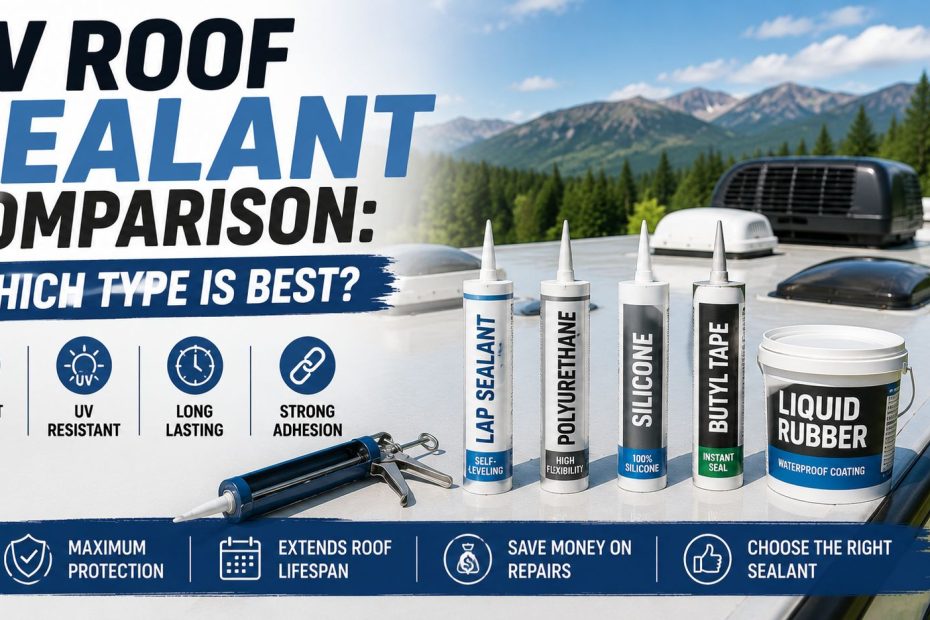
Polyureas do not have the same type of material as Liquid Rubber Roof and similar polymers. It is similar to comparing ArmorLiner, or any other polyurea, to these polymers. Although they can be used in the same way, each has its own strengths and weaknesses. Polymer roof coatings have many uses and formulas and vary greatly from company to company as to what they do, and how they are applied as well as how they will give you many more hours of research.
Related guides
Frequently asked questions
What is the difference between pure and hybrid polyurea?
Both come in two drums, A and B, but they cure differently. In pure polyurea the two chemicals react to form a new material. A hybrid pairs a formula with a catalyst, a bit like epoxy. That difference gives pure polyurea better flexibility, tear strength and bond, while hybrids are more sensitive to conditions while they cure.
How long does a polyurea RV roof coating last?
It depends on the type. Pure polyurea has a slower UV decay rate and is described as going up to 20 years in the sun before it starts to show age. Hybrid polyureas break down faster and can begin to show UV damage within five years. Treat those as seller figures and ask your applicator what their product is rated for.
Can polyurea be sprayed on an RV roof in humid or cold weather?
Pure polyurea can. Because its two components react into a new material, it isn't affected by humidity or residue on the surface, and it can be applied in a wide range of weather without changing the final product. Hybrid polyurea is fussier: low temperatures, humidity and oils on the roof can all interfere with how it cures.
Is polyurea the same as liquid rubber roof coating?
No. Liquid rubber and similar polymer coatings are a different class of material, even when they're used the same way on an RV roof. Each has its own strengths and weaknesses, and polymer roof coatings vary a lot from company to company in what they do and how they're applied, so compare specific products, not categories.
Was polyurea designed for RV roofs?
Not originally. Many coatings now used on RVs started out for other jobs, like truck bed liners or industrial roofing. Pure polyureas can be formulated for a specific use, though, and RV roofing formulas are designed to be strong, flexible and able to bond to RV roofs as well as other substrates.
Did this guide help with your rig?

Written by