On this page12 sections
Quick Answer: RV roof coating vs sealant comes down to purpose. An RV roof sealant is used to seal seams, vents, skylights, and small leaks, while an RV roof coating covers the entire roof with a protective waterproof layer. Use sealant for localized repairs and coating for long-term roof protection.
The terms “RV roof coating” and “RV roof sealant” get used interchangeably a lot, which causes more confusion than it should. They’re not the same product, they’re not used the same way, and buying the wrong one for your situation can mean wasted money or a repair that doesn’t actually hold. This guide breaks down exactly what separates a coating from a sealant, and how to know which one your roof actually needs.
Here’s how we approached this: we compared how leading RV roofing manufacturers and technicians define each product, then combined that with practical guidance on when RV owners actually reach for one over the other.
RV Roof Coating vs Sealant: The Core Difference
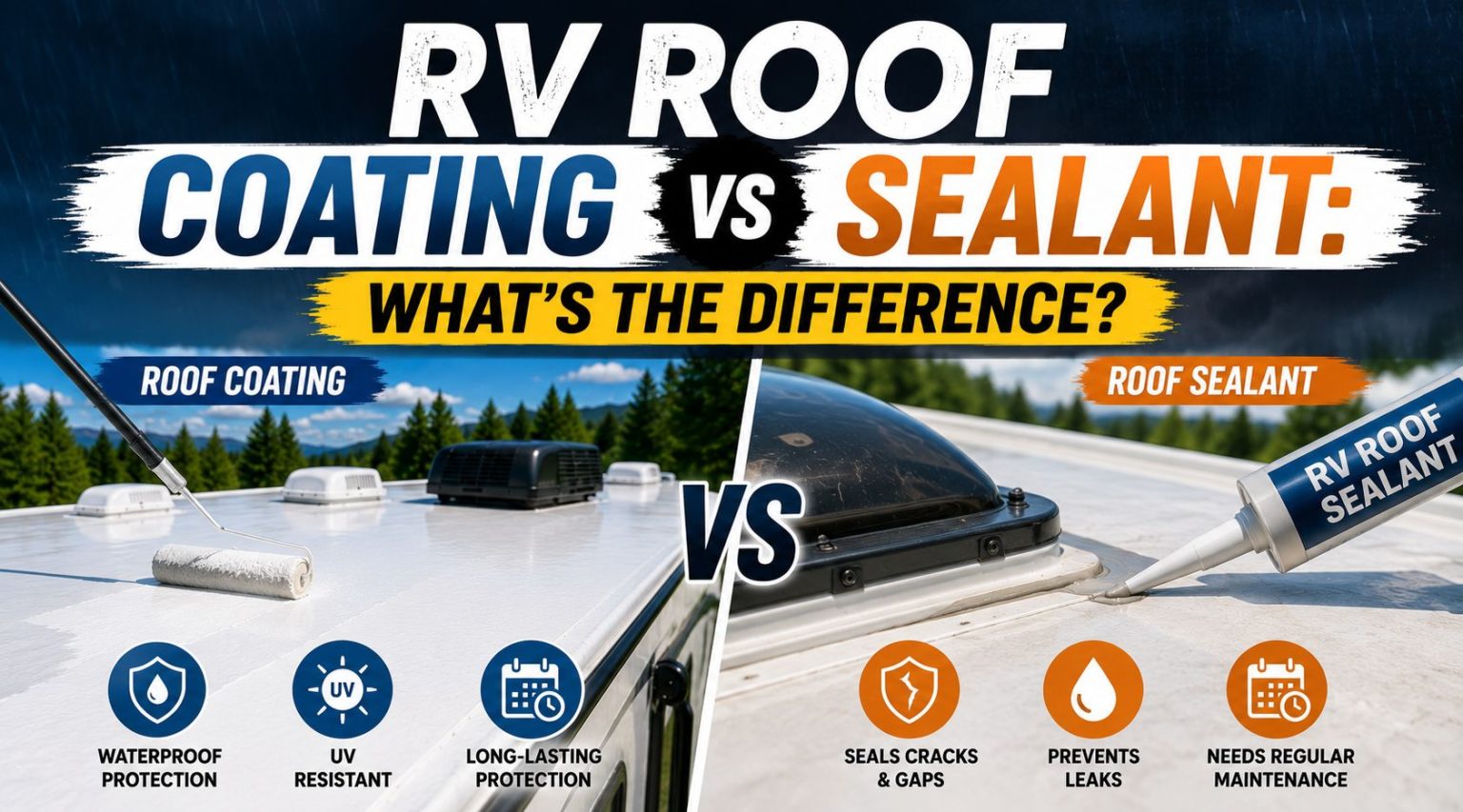
At a basic level, the difference comes down to coverage and purpose:
- Sealant is applied to specific, targeted areas: seams, vents, skylights, antenna mounts, screw heads, and roof edges. It’s the product you reach for when you find a small crack or gap during an inspection.
- Coating is applied across the entire roof surface. It creates a continuous waterproof barrier and is typically used when the roof needs broader protection, UV resistance, or a full reset after years of wear.
Think of sealant as a patch and coating as a full resurfacing. You may eventually need both on the same RV, but rarely for the same problem at the same time.
Comparison Table: Coating vs Sealant
| Feature | Roof Coating | Roof Sealant |
|---|---|---|
| Coverage | Entire roof surface | Specific spots: seams, vents, edges |
| Best used for | Broad protection, UV resistance, full restoration | Small leaks, cracks, targeted repairs |
| Typical lifespan | Several years before recoating | Often needs reapplication yearly or every few years |
| Application effort | Larger job, more prep and product needed | Quick, often a single tube and a caulk gun |
| Cost | Higher upfront cost | Lower cost per repair |
| When it’s the wrong choice | Roof only has one small failing spot | Roof has widespread cracking, chalking, or UV wear |
What Roof Sealant Actually Does
Sealant is designed to fill gaps and seams, the places most likely to let water in. Every vent, skylight, AC unit, and antenna mount on your roof is a penetration, meaning a hole was cut into the membrane at some point during manufacturing or installation. Sealant is what keeps water from working its way into those openings.
Most RV owners reach for sealant when they spot a specific problem: a cracked bead around a vent, a seam that’s starting to separate, or a screw head that’s lost its protective cap. It’s a fast, inexpensive fix for a contained issue, and it’s something most owners can apply themselves with basic tools.
The tradeoff is that sealant only protects where you apply it. If the rest of the roof membrane is aging, drying out, or chalking, sealant at the seams won’t do anything for the surface in between.
What Roof Coating Actually Does
A coating is a liquid applied product that goes over the entire roof surface once it cures, creating one continuous protective layer. Instead of targeting individual trouble spots, it addresses the whole membrane at once, which matters if the roof surface itself, not just the seams, has started to break down.
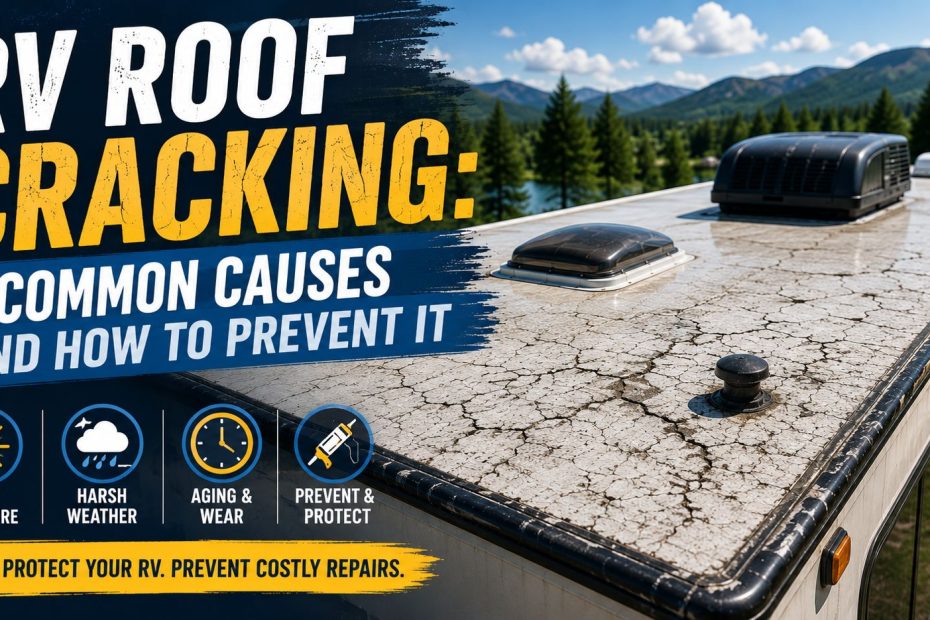
Coatings are commonly used when a roof shows widespread signs of UV wear, such as chalking or thinning, or when an owner wants to extend the roof’s life and reduce how often small repairs are needed. Many coating systems also reflect sunlight, which can help reduce heat inside the RV as a secondary benefit.
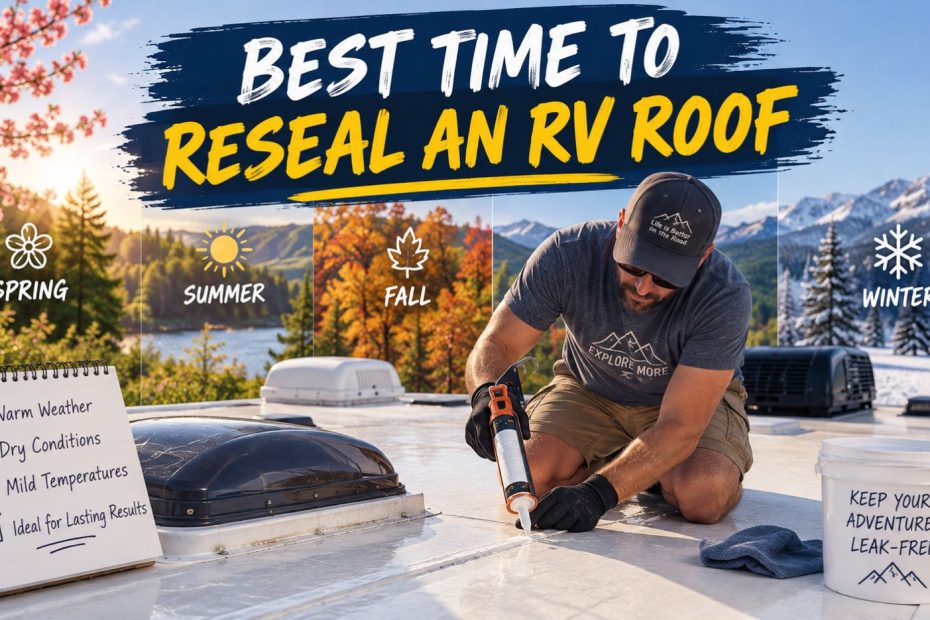
Coating is a bigger job than a sealant touch up. It usually requires thorough cleaning and prep beforehand, sometimes a primer, and more product and time to apply correctly across the full roof.
Coating, sealant or both?
Walk the roof first, then answer four questions to see which fix your roof actually needs.
Our recommendation
Sealant is enough for now
The problem is contained and the surface around it is still sound, so a targeted sealant repair is the fast, low-cost fix. Clean the spot, use a sealant rated for your roof material, and keep up with routine inspections. Revisit a coating if wear starts showing up across the surface.
Our recommendation
Time for a full coating
Wear across the membrane itself is something seam sealant can't reach. A coating covers the whole roof in one continuous layer, adds UV resistance, and many reflect sunlight to help cut heat inside. Plan for a bigger job: thorough cleaning, sometimes a primer, and a product matched to your roof material.
Our recommendation
Seal first, then coat
You have active damage on a roof that's also wearing out. Seal the cracks and leaks, let the sealant cure, then coat the entire roof; a coating over unresolved gaps won't fix them. If you're not confident coating a whole roof, many owners hire out that step and keep doing sealant touch-ups themselves.
How your answers stacked up
- Sealant is enough for now
- Time for a full coating
- Seal first, then coat
When to Use Sealant
Sealant is generally the right call when:
- You’ve found one or two isolated cracks or gaps during a routine inspection
- The rest of the roof surface still looks and feels in good condition
- You want a fast, low cost fix rather than a full project
- You’re doing routine maintenance rather than addressing a widespread issue
When to Use a Coating
A coating makes more sense when:
- The roof shows chalking, thinning, or wear across most of the surface, not just at seams
- You’re seeing repeat leaks in different spots, suggesting the membrane itself is aging out
- You want to extend the roof’s overall lifespan rather than keep patching individual areas
- You’re preparing the RV for long term ownership or resale and want a clean, fully restored roof
Can You Use Both?
Yes, and in many cases you should. A common approach is to seal any active leaks or damaged spots first, let that cure, and then apply a full coating over the entire roof for broader protection going forward. Applying a coating over unresolved cracks or gaps doesn’t fix the underlying problem, so addressing isolated damage with sealant before a full coat is usually the right order of operations.
RV roof materials estimator
Enter your roof size and what is mounted on it for a rough shopping list of coating, sealant and tape.
A planning estimate, not a quote. Coverage varies widely by product, surface and application thickness, so check each label and buy a little extra.
Does Roof Material Change the Choice?
Yes. Coatings and sealants both need to be matched to your specific roof material, whether that’s EPDM rubber, TPO, fiberglass, or aluminum. A product built for one membrane type isn’t automatically safe or effective on another, and using an incompatible product can cause poor adhesion or even damage the surface. Always check the label or manufacturer guidance for your exact roof type before buying either product. If you’re not sure what your roof is made of, our guide on types of RV roofing materials can help you identify it first.
Cost and Longevity: What to Actually Expect
Cost is often the deciding factor for RV owners weighing a coating against ongoing sealant repairs, so it helps to know roughly what you’re comparing.
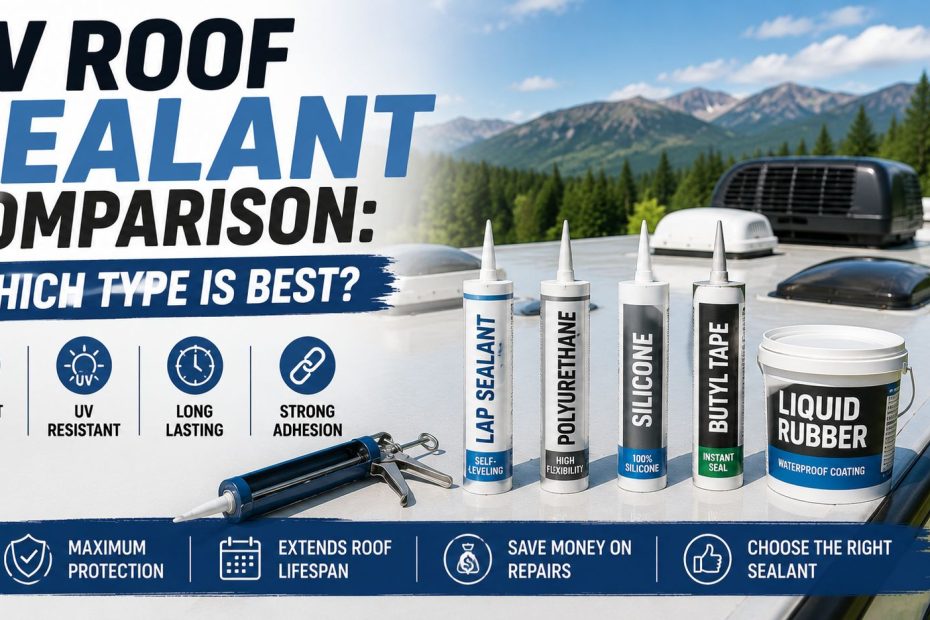
A tube of sealant is inexpensive, often under $20, and a spot repair might take an afternoon from start to finish. Over several years, though, repeated sealant touch ups across multiple trouble spots can add up, both in cost and in the time spent climbing up and down a ladder.
A full roof coating costs more upfront, sometimes significantly more depending on the product and whether you hire it out, but it’s designed to protect the entire surface for several years at once rather than one spot at a time. For a roof that’s already showing wear across most of its surface, that upfront cost often works out cheaper than years of scattered patch jobs, plus it reduces the odds of a surprise leak from a spot you hadn’t gotten to yet.
Neither option is inherently the “cheaper” choice. It depends entirely on how much of the roof actually needs attention right now.
DIY vs Professional Application
Sealant repairs are generally manageable for most RV owners with basic tools and a bit of patience. A full roof coating is also doable as a DIY project, but it’s a bigger commitment: proper cleaning, prep, and even application across the entire roof matter a lot for how well the coating performs and how long it lasts. Owners who aren’t confident working across a full roof, or who want a warranty backed result, often choose a professional service for the coating step specifically, while still handling smaller sealant touch ups themselves.
For step by step guidance on either approach, see our full RV roof repair guide, and if you’re trying to figure out how often either product needs to be reapplied, our breakdown of how often you should reseal an RV roof covers realistic timelines by material and climate.
Frequently asked questions
Is RV roof coating the same as sealant?
No. Sealant targets specific spots like seams and vents, while coating covers the entire roof surface as one continuous protective layer.
Can I put sealant under a roof coating?
Yes. It’s common practice to seal any active cracks or gaps first, let the sealant cure, and then apply the coating over the full roof afterward.
How long does an RV roof coating last?
This varies by product and climate, but many coatings are rated for several years before they need to be reapplied. Always check your specific product’s manufacturer rating.
Do I need a coating if I already keep up with sealant repairs?
Not necessarily. If the roof surface itself is still in good shape and you’re only dealing with occasional seam issues, ongoing sealant maintenance may be enough. A coating becomes more worthwhile once the surface itself starts showing widespread wear.
Is roof coating worth the extra cost compared to sealant?
It depends on your roof’s condition. For a roof with isolated issues, coating is often more than you need. For a roof with widespread UV wear or repeat leaks in different spots, a coating can be more cost effective long term than repeated sealant patches.
Can I apply roof coating myself?
Yes, many RV owners do their own coating application, though it requires more prep and time than a sealant touch up. Following the product’s cleaning, priming, and cure time instructions closely matters more here than with a small sealant repair.
Final Thoughts
Not sure whether your roof needs a coating or just a sealant touch up? Walk the roof and check whether the problem is isolated to a few spots or spread across the whole surface. That single observation usually points you to the right answer.
Sealant and coating solve different problems, and knowing which one you actually need can save you money on one end and a repeat leak on the other. Match the fix to what your roof is actually telling you: isolated cracks call for sealant, while widespread wear calls for a full coat. When in doubt, a quick inspection before you buy either product is always worth the ten minutes it takes.
Did this guide help with your rig?

Written by