On this page12 sections
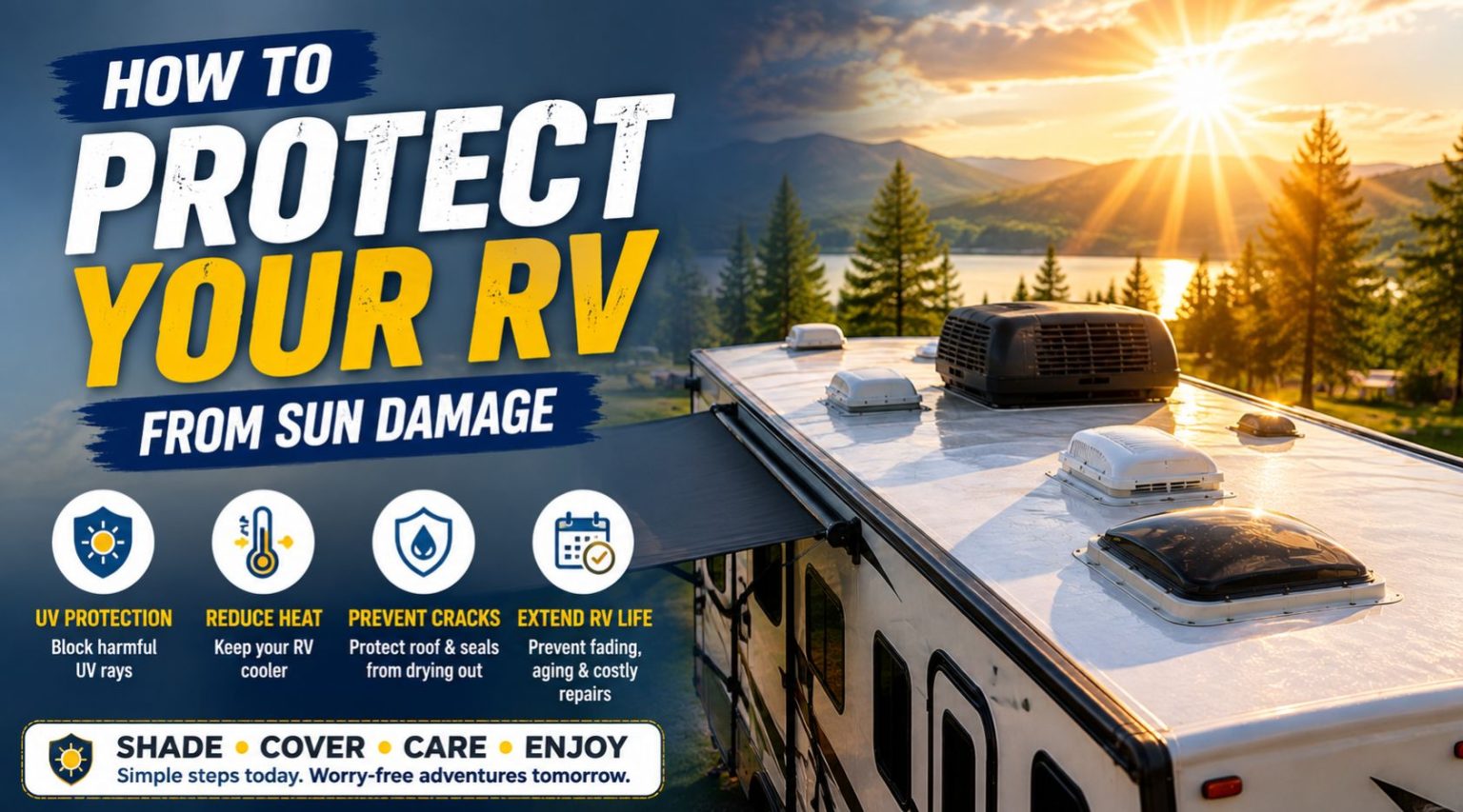
If you’ve ever driven past an older RV with chalky, faded paint, cracked seals, or a roof that looks dry and brittle, you’re looking at years of accumulated sun damage. UV radiation is constant, and unlike your skin, an RV can’t just apply sunscreen and go about its day. The good news is that most sun damage is preventable, or at least slowed down significantly, with a handful of habits that don’t take much time or money compared to the repair costs down the road.
Here’s how we approached this guide: we looked at what actually degrades an RV’s materials under UV exposure, pulled together protective techniques recommended by RV manufacturers and detailers, and organized it by the specific part of the RV each method protects.
Why UV Damage Is Such a Big Deal for RVs
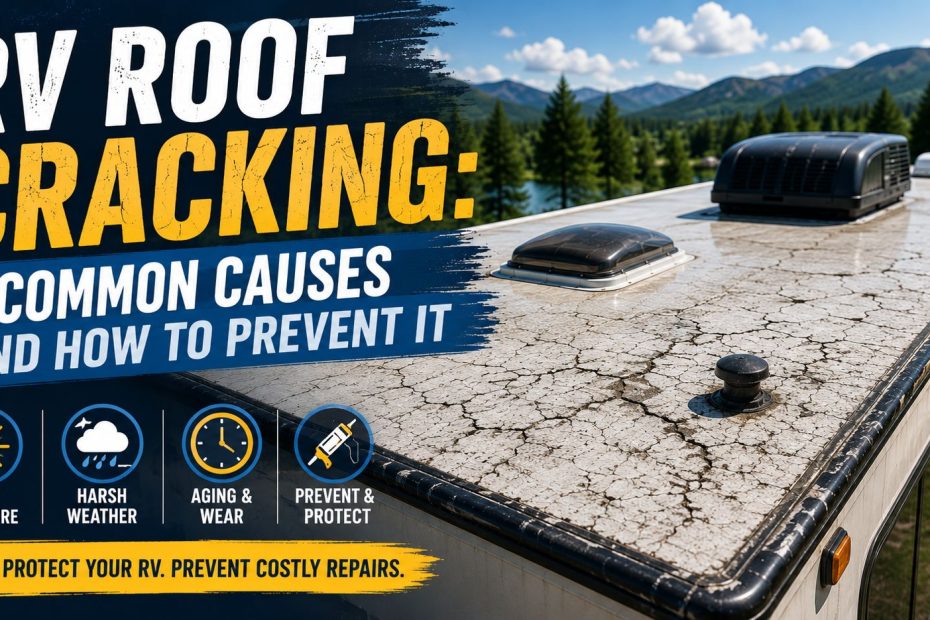
Ultraviolet radiation breaks down materials at a molecular level over time. On an RV, that shows up in a few predictable ways: paint and decals fade and lose their shine, rubber seals and gaskets dry out and crack, roof membranes become brittle and prone to splitting, and plastic or vinyl components turn chalky and weak. None of this happens overnight, which is exactly why it’s easy to ignore until the damage is already extensive.
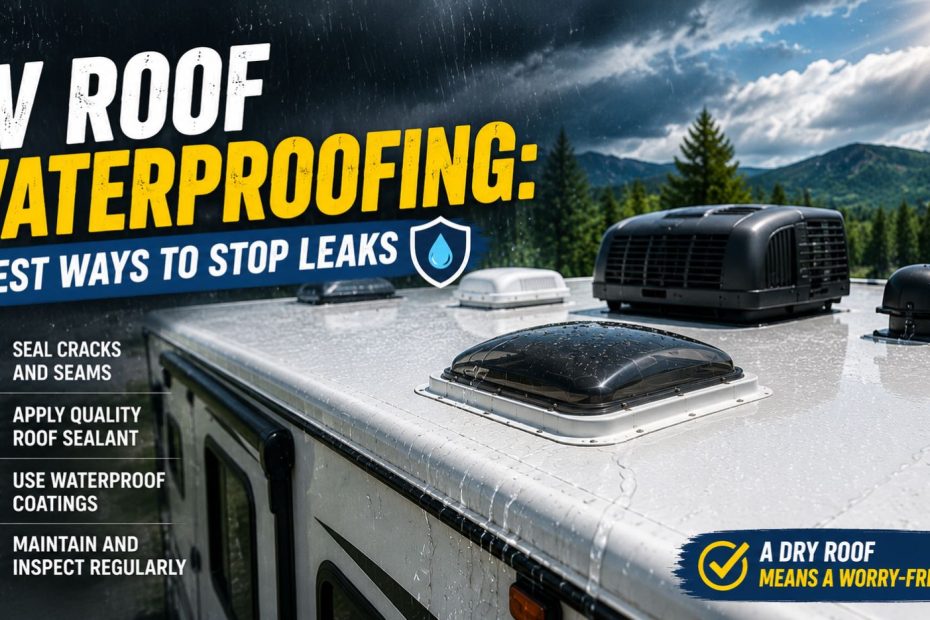
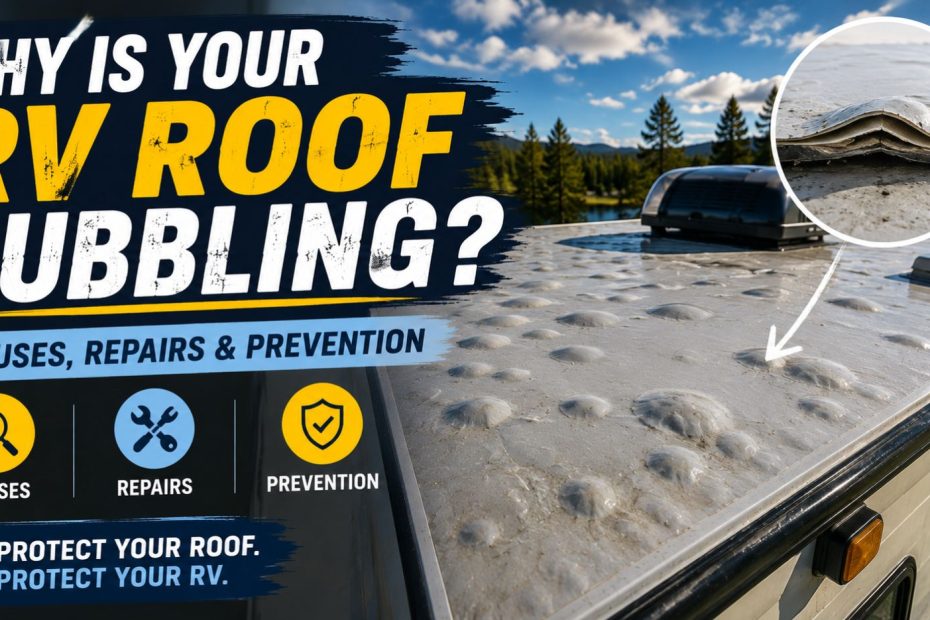
The tricky part is that a lot of UV damage isn’t just cosmetic. A cracked window seal or a sun-brittled roof seam is a direct path for water to get in, which means UV damage and moisture damage are often connected. Protecting your RV from the sun isn’t just about keeping it looking good, it’s part of keeping it structurally sound.
Protect the Roof First
Your RV’s roof takes more direct sun than any other surface, since it’s almost always fully exposed with nothing shading it. This makes it the single most important area to prioritize.
- Inspect regularly for cracked sealant, brittle seams, and chalking, which is a sign the roof material is breaking down from UV exposure.
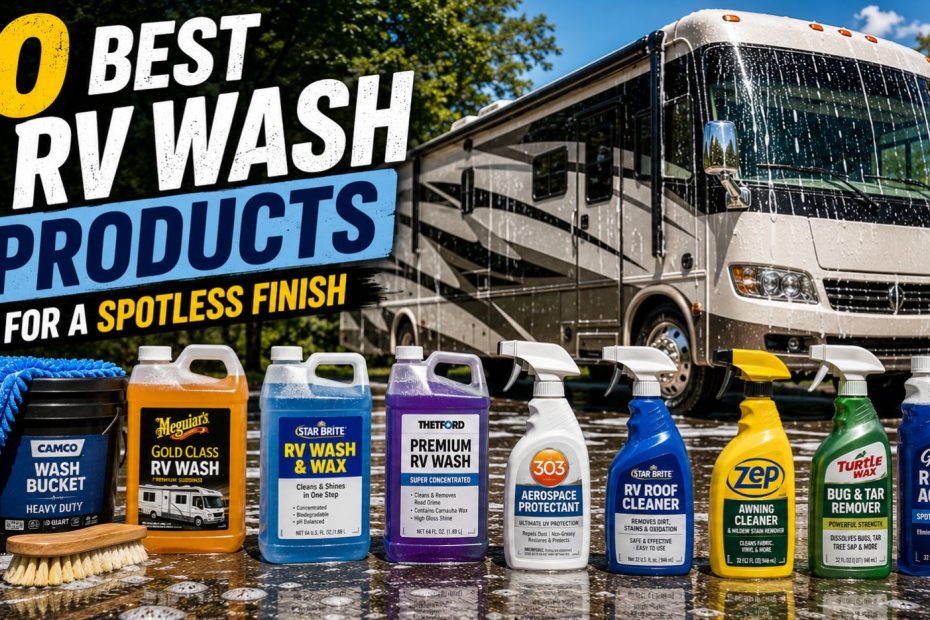
- Clean the roof on a regular schedule, since dirt and grime can trap heat and moisture against a surface that’s already stressed by sun exposure. Our picks for the best RV roof cleaner options cover safe, roof-friendly products.
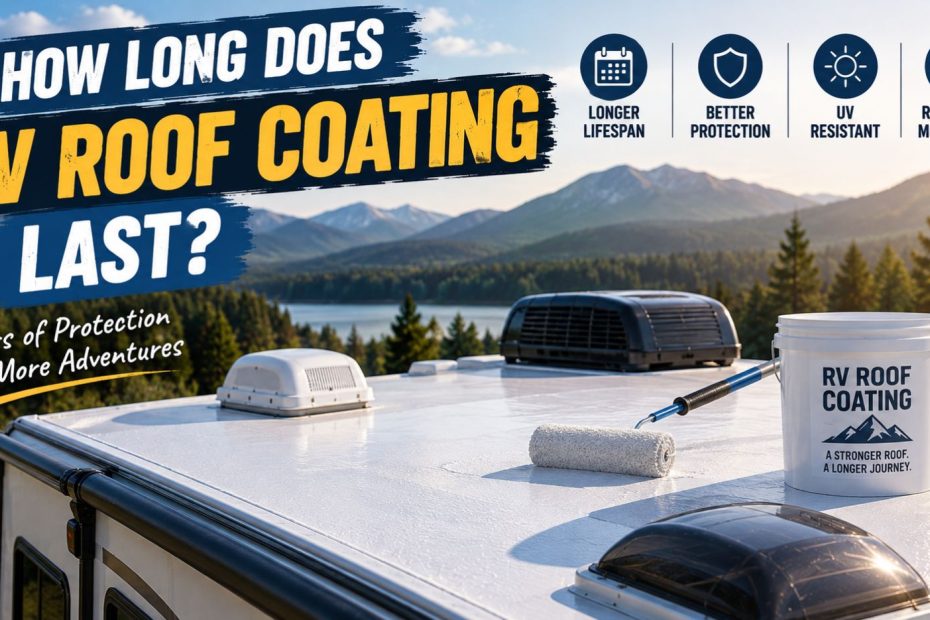
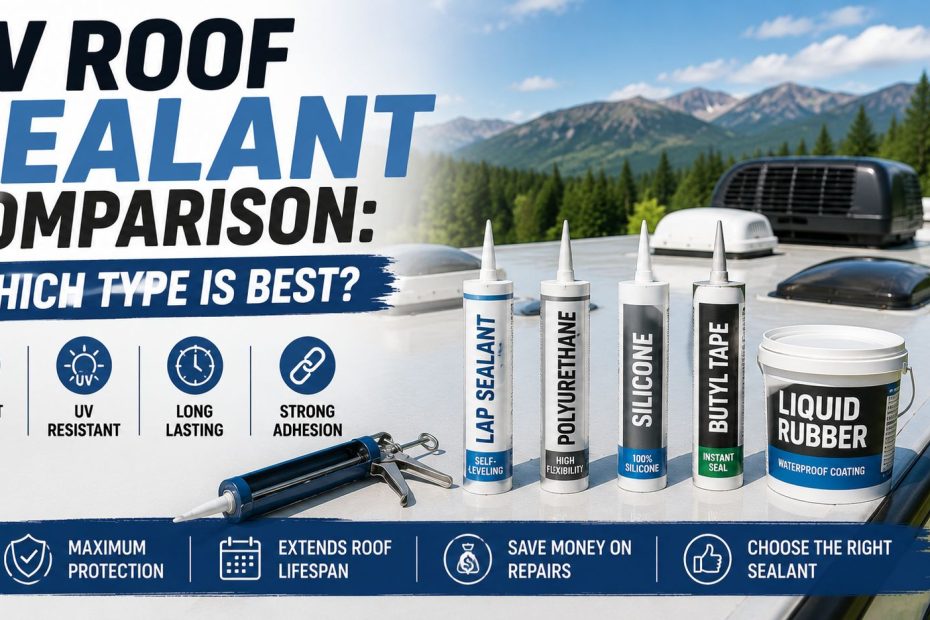
- Apply a UV protective roof coating, which adds a dedicated barrier against sun damage on top of the roof membrane itself and can significantly extend the roof’s usable life.
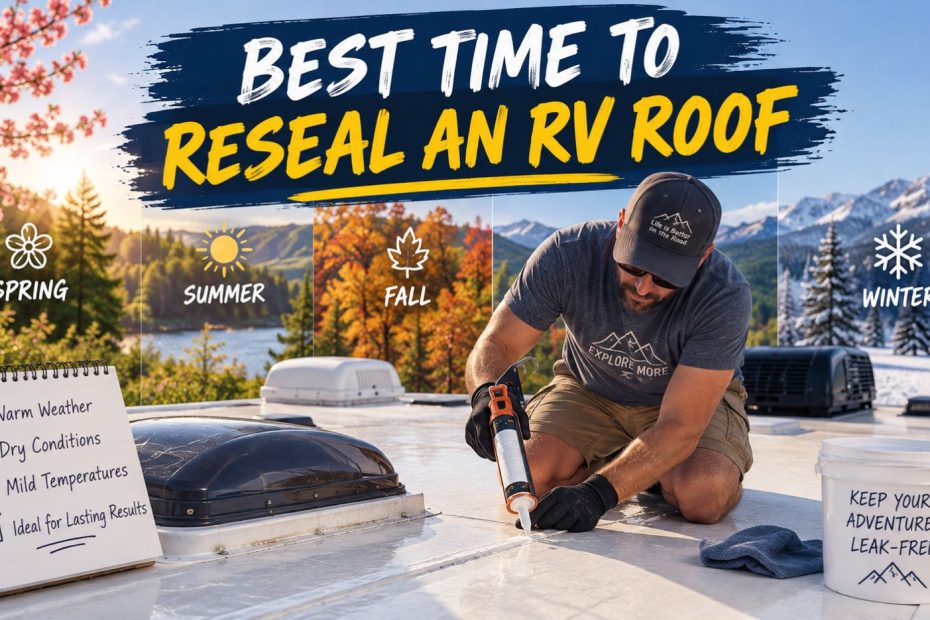
Since the roof is such a major factor in overall sun protection, it’s worth pairing this with our RV roof maintenance checklist and our comparison of RV roof coating vs sealant, since a coating is specifically the layer that adds UV resistance beyond what basic sealant provides. If you’re not sure how often your specific roof needs attention, our guide on how often you should reseal an RV roof breaks it down by material and climate.
Protect the Exterior Paint and Gelcoat
Fiberglass RVs typically have a gelcoat finish, while others rely on painted aluminum or composite panels. Both fade and oxidize under constant UV exposure if left unprotected.
- Wash and wax regularly, ideally a couple of times a year, using a wax product with UV protection built in. Always wash before waxing so you’re not sealing dirt into the finish.
- Address oxidation early. A dull, chalky finish is often reversible with a proper compound and wax treatment if caught before it goes too deep into the gelcoat.
- Consider a ceramic coating or ceramic-infused product for longer lasting UV protection than traditional wax, especially if your RV spends most of its time parked outdoors.
Protect the Windows and Interior
UV damage isn’t limited to the exterior. Sunlight pouring through windows fades upholstery, dries out interior trim, and can heat up the cabin significantly, which puts extra strain on your AC system too.
- Window tint cuts down on UV transmission while still letting light in, and it’s a one-time investment that pays off in both interior protection and comfort.
- Blackout or reflective window shades are a lower cost alternative to tinting, though they block light entirely when in place rather than just filtering UV.
- Rotate or cover furniture and upholstery if certain areas get consistent direct sun, since fabric and vinyl fade unevenly otherwise.
Sun protection plan by component
Start with shade and the roof, since the roof takes the most sun, then work down to paint, windows, tires and seals.
0 of 15 done
Protect the Tires
Tires are rubber, and rubber degrades under UV exposure just like roof membranes and seals do. Sun damaged tires can develop cracking, called dry rot, which is a real safety concern, not just a cosmetic one.
- Use tire covers whenever the RV is parked for more than a day or two, especially in hot, sunny climates.
- Check tire pressure and condition regularly, since UV damage often shows up as small surface cracks before it becomes a structural problem.
- Park in shade when possible, which protects tires along with everything else on the RV.
Protect Seals and Gaskets
Window seals, slide-out seals, and door seals are all made from rubber or rubber-like materials that dry out and crack under sustained UV exposure. Once a seal fails, it’s not just a sun damage problem anymore, it becomes a direct entry point for water.
- Inspect seals regularly for cracking, shrinking, or stiffness, especially around slide-outs and windows.
- Apply a rubber conditioner made for RV seals periodically to help keep them flexible and slow down UV related drying.
- Replace seals that are already cracked rather than waiting for a leak to develop, since a failed seal rarely improves on its own.
Park in Shade Whenever You Can
This is the simplest and most effective form of sun protection, and it’s free. Parking under trees, a carport, or covered storage reduces direct UV exposure to the roof, exterior, tires, and interior all at once. The obvious trade-off is solar power, since RVs relying on rooftop solar panels need direct sun to charge efficiently. If that’s your situation, a portable, ground deployable solar setup lets you park in shade while still positioning panels in the sun separately.
RV roof care planner
Answer five quick questions and get a 12-month maintenance schedule you can drop straight into your calendar.
Intervals follow the ranges in our guides: inspect every 3 to 6 months, clean 2 to 4 times a year, reseal trouble spots every 1 to 3 years. Add a check after any severe storm.
Use an RV Cover for Long Term Storage
If your RV sits unused for weeks or months at a time, a quality RV cover is one of the most effective sun protection tools available. A properly fitted cover blocks UV exposure to the roof, sides, and windows all at once, and many are also designed to resist dust, moisture, and bird droppings. Look for a cover made specifically for your RV’s size and type, since a poor fit can cause chafing against the surface, which creates its own set of problems.
Comparing the Main Sun Protection Methods
| Method | Protects | Ongoing Effort | Best For |
|---|---|---|---|
| RV cover | Roof, sides, windows | Low, put on and remove as needed | Long term storage |
| Parking in shade | Everything | None, just a habit | Daily and travel use |
| UV roof coating | Roof | Reapply every few years | All RVs, especially older roofs |
| UV protective wax | Paint, gelcoat | Every 6 months | Fiberglass and painted exteriors |
| Window tint | Interior, upholstery | One-time application | RVs used frequently in sun |
| Tire covers | Tires | Low, put on when parked | Extended parking in sun |
How to Protect Your RV From Sun Damage: A Simple Routine
If this feels like a lot to track, here’s a reasonable routine most RV owners can follow without much extra effort:
- Park in shade whenever it’s practical, without sacrificing needed solar exposure
- Wash and wax the exterior every six months, checking for early oxidation
- Inspect and clean the roof on the same seasonal schedule as your general maintenance checks
- Apply a UV roof coating every few years based on your specific product’s rating
- Check window seals, slide-out seals, and tires for cracking during each seasonal inspection
- Use an RV cover for any extended storage period longer than a few weeks
Frequently asked questions
What part of an RV is most affected by sun damage?
The roof, since it’s almost always fully exposed with no shade. Paint, gelcoat, seals, and tires all take damage too, but the roof tends to show wear first.
Does an RV cover really make a difference?
Yes, a properly fitted cover significantly reduces UV exposure to the roof, exterior, and windows during storage, which is one of the most effective single steps you can take.
How often should I wax my RV to protect it from the sun?
Roughly every six months for most exteriors, though this can vary based on your climate and how much direct sun exposure the RV gets.
Can sun damage be reversed once it’s happened?
Some of it, like early oxidation on paint or gelcoat, can often be corrected with compounding and waxing. Cracked seals, brittle roofing, and dry rotted tires usually need replacement rather than restoration.
Is window tint worth it for an RV?
For RVs used frequently in sunny climates, yes. It reduces UV exposure to the interior, cuts down on fading, and helps keep the cabin cooler, which also reduces strain on your AC system.
Do solar panels make sun protection harder?
They can create a trade-off, since panels need direct sun while parking in shade protects the rest of the RV. A ground deployable solar setup lets you separate the two, parking the RV in shade while positioning panels in the sun nearby.
Final Thoughts
Take ten minutes this week to check your roof, seals, and tires. Catching early UV wear now is far cheaper than replacing a cracked roof membrane or dry rotted tires later.
Sun damage adds up slowly, which is exactly why it’s easy to overlook until it’s expensive to fix. A consistent routine, shade when you can get it, a cover during storage, regular waxing, and roof coating, does most of the heavy lifting. None of these steps take much time individually, but together they make a real difference in how long your RV holds up against years of sun exposure.
Did this guide help with your rig?

Written by