On this page11 sections
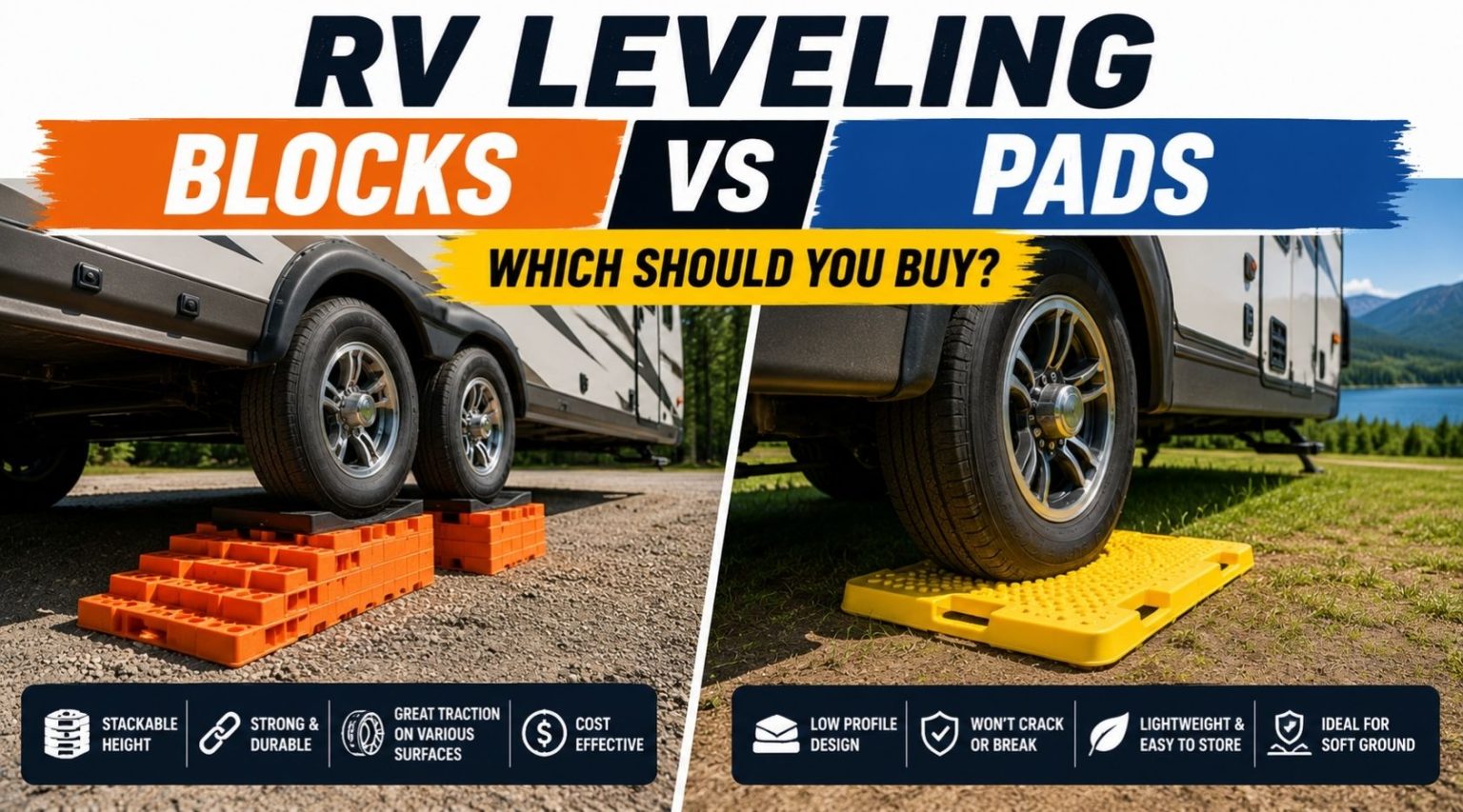
RV Leveling blocks raise the RV to correct a slope, typically stacked under tires or jacks. Leveling pads sit flat under jacks or existing blocks to add stability and prevent sinking on soft ground. Most RVers end up using both together rather than choosing one over the other.
If you’ve spent any time shopping for RV setup gear, you’ve probably noticed leveling blocks and leveling pads get mentioned in the same breath, sometimes even used interchangeably, even though they solve two different problems. Getting this mixed up is an easy way to buy the wrong product for your actual situation, so it’s worth understanding exactly what each one does before you add anything to cart.
Here’s how we approached this: we compared what each product is actually designed to do, looked at how real RV owners use them in different camping situations, and broke down which one fits which scenario so you’re not guessing at checkout.
What Are RV Leveling Blocks?
Leveling blocks are stackable pieces, usually plastic, though sometimes wood or forged composite, designed to raise the RV to correct for a sloped or uneven site. You drive the tire up onto a stack of blocks, or place them under a jack, to gain height until the RV sits level. Most plastic blocks interlock, so you can build a stack of the exact height you need for that specific site.
Leveling blocks solve a height problem. If one side or corner of your RV is lower than the rest because of the terrain, blocks add the lift needed to even things out.
What Are RV Leveling Pads?
Leveling pads are flat, usually made of solid rubber or a similar composite material, and they sit underneath a jack, stabilizer foot, or an existing stack of leveling blocks. Rather than adding height, their job is to spread out the load and create a stable, grippy surface, especially on soft or uneven ground like gravel, dirt, sand, or grass.
Leveling pads solve a stability and sinking problem. Without one, a jack or a stack of plastic blocks can slowly sink into soft ground over the course of a stay, or slide around on a hard, slick surface like concrete.
RV Leveling Blocks vs Leveling Pads: Side by Side
| Factor | Leveling Blocks | Leveling Pads |
|---|---|---|
| Main purpose | Add height to correct a slope | Add stability, prevent sinking or sliding |
| Typical material | Plastic, wood, or composite | Solid rubber or recycled composite |
| Used under | Tires or jacks | Jacks, stabilizers, or under blocks |
| Best surface | Any surface, especially sloped ground | Soft or slick ground: gravel, dirt, grass, concrete |
| Stackable for height | Yes | No, they’re flat and not meant to be stacked for lift |
| Common failure point | Cracking under heavy weight, especially cheap plastic | Wearing down over years, though generally more durable |
| Typical cost | Lower for basic plastic sets | Higher, especially for premium rubber pads |
RV leveling calculator
Work out how many block layers the low side needs, or use your phone as a level to measure the tilt.
3 block layers under the low-side tires
Pads add stability, not height. Check your blocks' weight rating and the maker's stacking guidance before you drive up.
When You Actually Need Leveling Blocks
Blocks are the right call whenever the ground itself is sloped and you need to physically raise part of the RV. A few common situations:
- Sloped campsites, which are extremely common at both public and private campgrounds
- Driveways or home parking that aren’t perfectly flat
- Travel trailers and fifth wheels that need tire-side leveling before you even deploy stabilizer jacks
- Motorhomes with hydraulic leveling systems that still occasionally need extra height in one spot beyond what the system alone can correct
If your RV has an automatic leveling system, you may need blocks less often, but most owners still keep a set on hand for sites with more slope than the system can fully compensate for on its own.
When You Actually Need Leveling Pads
Pads solve a completely different problem, and skipping them is one of the more common regrets new RV owners mention after their first season. Reach for pads when:
- You’re parked on gravel, dirt, or grass, where jacks or blocks can sink under the RV’s weight, especially after rain
- You’re on concrete or asphalt, where plastic blocks can slide or skid without something grippy underneath
- You want to protect your leveling blocks, since a pad underneath reduces cracking from uneven or rocky ground pressing into the block from below
- You camp frequently in variable conditions and want one setup that works reliably across different terrain types
Pads are also popular as a permanent addition directly on the jack foot itself, some products snap on and stay attached to the jack full time, so leveling stability is handled automatically every time you set up, without needing to place a separate pad each time.
Can You Use Both Together?
Yes, and this is genuinely the most common real world setup among experienced RV owners. A typical combination looks like this: leveling pads go down first on the ground to create a stable, grippy base, then leveling blocks are stacked or placed on top of the pad to correct for height. This gives you both the lift you need and protection against sinking or sliding, rather than choosing one benefit over the other.
Owners who camp mostly on paved sites with minimal slope sometimes get away with pads alone, or blocks alone, but anyone who regularly camps on grass, gravel, or sloped terrain tends to end up with both in their setup kit eventually.
Choosing the Right Blocks for Your RV
Not all leveling blocks are built the same, and the right choice depends heavily on your RV’s weight:
- Lightweight trailers and pop-ups generally do fine with basic interlocking plastic blocks
- Heavier travel trailers and fifth wheels benefit from thicker, higher load rated blocks, since standard plastic sets can crack under repeated heavy use
- Large motorhomes, especially Class A diesel pushers, often need blocks with a larger surface area and higher weight rating, since concentrated jack pressure on a small block increases the risk of cracking
Checking the manufacturer’s weight rating against your RV’s actual weight, not just its class, is worth doing before you buy, since underrated blocks are one of the most common early failures owners report.
Blocks, pads, or both?
Three questions about where you park and what goes wrong at setup point to the gear you actually need.
Our recommendation
Start with leveling blocks
Your problem is height, and only blocks add lift. Buy blocks rated for your RV's actual loaded weight, since underrated plastic cracks under heavier rigs. If they ever slide on concrete, or you start camping on soft ground, put a pad under them.
Our recommendation
Start with leveling pads
Your sites are close to level, so the job is stability: pads spread the load so jacks don't sink into soft ground or slide on concrete. Match the pad to the jack footprint, and remember pads add no height, so a sloped site still calls for blocks.
Our recommendation
Get both: pads down, blocks on top
This is the most common setup among experienced owners. Lay the pad first for a stable, grippy base, then stack blocks on it for height; the pad also protects the blocks from cracking on rocky ground.
How your answers stacked up
- Start with leveling blocks
- Start with leveling pads
- Get both: pads down, blocks on top
Choosing the Right Pads for Your RV
Pad selection comes down mostly to size and material quality:
- Match the pad size to your jack or block footprint, since an undersized pad won’t fully support the load and can crack or shift under weight
- Solid rubber tends to outperform recycled composite blends in terms of long term durability, though it usually costs more
- Snap-on style pads that stay permanently attached to the jack foot are worth considering if you want a fully automatic setup process every time you park
Common Mistakes to Avoid
- Using blocks without a pad on soft ground. This is one of the fastest ways to end up with a sunken jack or a cracked block after a rainy weekend.
- Buying blocks rated for a lighter RV than yours. Cracked blocks under load are a safety issue, not just an inconvenience.
- Assuming pads add height. Pads are flat and meant for stability, not for lifting the RV, so don’t rely on them to correct a slope.
- Skipping a level check before extending jacks fully. Blocks and pads work best when the RV is close to level before jacks take the rest of the load.
Related guides
Frequently asked questions
Do I need both leveling blocks and leveling pads?
Most experienced RV owners eventually use both, pads for stability and protection against sinking, blocks for correcting height on sloped ground. You may get away with just one depending on where you typically camp.
Can leveling pads replace leveling blocks?
No, they solve different problems. Pads don’t add height, so they can’t correct a sloped site on their own the way blocks can.
What’s the difference between leveling blocks and stabilizer jacks?
Leveling blocks correct height and slope. Stabilizer jacks reduce movement and rocking once the RV is already level, they aren’t primarily designed to lift or level the rig.
Are rubber leveling pads worth the extra cost over plastic blocks alone?
For anyone camping regularly on gravel, dirt, or grass, most owners find the added stability and reduced risk of a sinking jack worth the investment, especially since pads also protect plastic blocks from cracking.
How do I know what weight rating I need for leveling blocks?
Check your RV’s actual loaded weight, not just its class, and compare that against the manufacturer’s rated capacity for the blocks, keeping in mind that jack pressure concentrates weight onto a small surface area.
Can I use wood instead of plastic blocks or pads?
Homemade wood blocks are a common budget option and work reasonably well for occasional use, though they tend to wear out, splinter, or absorb moisture faster than purpose built plastic or rubber products over time.
Final Thoughts
Check your RV’s weight rating and your typical camping terrain before buying either product. That combination tells you almost everything you need to know about which setup fits your situation.
Leveling blocks and leveling pads aren’t competing products so much as two tools that solve different halves of the same problem. Blocks handle height, pads handle stability, and using them together covers you across the widest range of campsite conditions you’re likely to run into. Whichever combination you land on, matching the product to your RV’s actual weight and the terrain you camp on most is what actually determines whether your setup holds up over time.
Did this guide help with your rig?

Written by