On this page12 sections
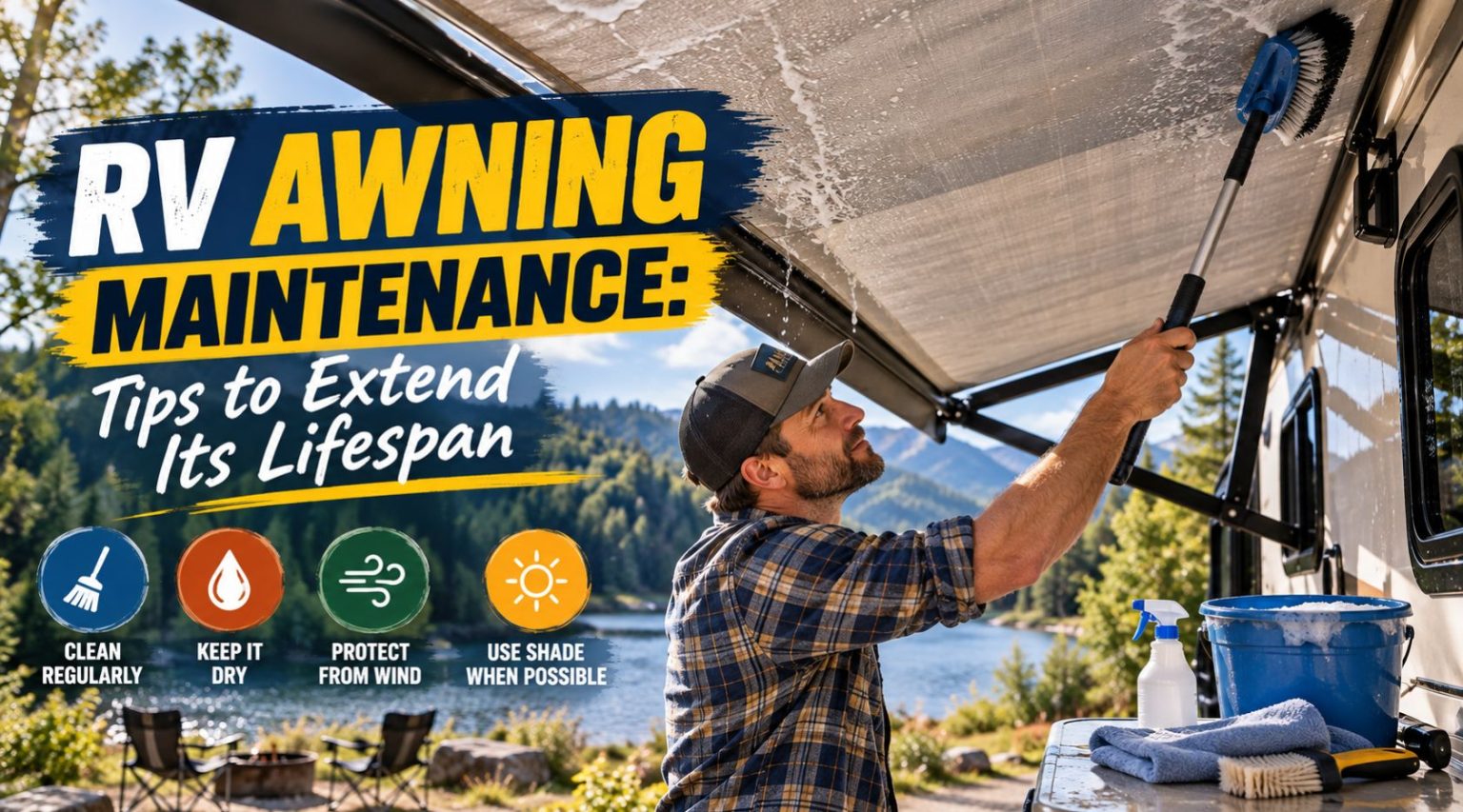
Good RV awning maintenance means cleaning the fabric with mild soap and water every few months, always letting it dry completely before rolling it up, inspecting the arms and roller tube for damage twice a year, and retracting it during wind or heavy rain. Done consistently, these habits can help an awning last the life of the RV instead of needing replacement after just a few years.
Most RV owners think about the roof, the tires, and the water system long before they think about the awning, right up until it costs hundreds or even thousands of dollars to replace. The awning takes constant sun, wind, rain, and handling every time you set up and break down camp, yet it’s one of the least talked about maintenance items on the entire rig. The good news is that awning care isn’t complicated. A handful of consistent habits, most of which take only a few minutes, are the difference between an awning that lasts the lifetime of the RV and one that needs replacing after a few rough seasons.
Here’s how we approached this guide: we looked at manufacturer care guidance from major awning brands, compared cleaning recommendations across fabric types, and pulled together the habits experienced RV owners report actually extending the life of their awning.
Know Your Awning Fabric First
Before you clean or treat anything, it helps to know what material you’re working with, since vinyl and acrylic awnings need slightly different care.
Vinyl awnings are a non-porous, marine-grade material. They’re water resistant and naturally mildew resistant, which makes them a solid choice for humid climates, and they’re generally easier to clean since dirt doesn’t work its way into the material the way it can with woven fabric.
Acrylic awnings are a breathable, woven fabric that allows better airflow underneath, keeping the shaded area cooler than vinyl. The tradeoff is that acrylic is more prone to mold and mildew if it’s rolled up wet, and the fabric’s water repellent coating gradually wears down over time and needs to be reapplied to keep water from soaking through.
If you’re not sure which one you have, check your owner’s manual or look for a manufacturer tag on the awning itself. When in doubt, test any cleaner on a small, hidden section first before applying it to the whole awning.
Comparing Vinyl and Acrylic Awning Care
| Factor | Vinyl | Acrylic |
|---|---|---|
| Water resistance | Fully water resistant | Water repellent coating, not waterproof |
| Mildew resistance | Naturally resistant | More prone to mildew if stored wet |
| Airflow underneath | Less breathable, warmer | More breathable, cooler in shade |
| Cleaning difficulty | Easier, non-porous surface | Needs gentler handling of woven fibers |
| UV coating maintenance | Occasional protectant application | Needs periodic re-waterproofing |
| Best for | Humid climates, low-maintenance owners | Hot, dry climates wanting cooler shade |
How Often Should RV Awning Maintenance Happen
Cleaning frequency really comes down to how often you use the RV and what conditions you camp in:
- Full-time RVers should aim for a thorough cleaning every two to three months
- Weekend and seasonal campers can generally get away with a deep clean once or twice a year
- A quick rinse with a hose every month or so, even without a full cleaning, helps prevent dirt and grime from building up enough to require heavy scrubbing later
- Check before and after every trip, especially if you camped under trees or in a dusty, humid, or windy area, since visible dirt, dark streaks, sticky residue, bird droppings, tree sap, or a musty smell are all signs it’s time to clean sooner than your regular schedule
How to Clean Your RV Awning Step by Step
- Inspect before you clean. Check the fabric for tears, frayed edges, or existing damage, and address repairs before introducing water and cleaner to the area.
- Brush off loose dirt and debris first. A soft brush or broom removes surface dirt before you add water, which prevents grinding grit into the fabric.
- Rinse the awning with a hose. Use cool to lukewarm water, never anything hot, since heat can damage the fabric’s coating.
- Mix a mild cleaning solution. Warm water with a gentle dish soap like Dawn or Woolite works well for most fabric types. Avoid harsh detergents, bleach, or anything abrasive, since these can strip protective coatings and cause discoloration.
- Scrub gently with a soft bristle brush. A car wash brush works well. Let the solution sit for a few minutes before scrubbing to help loosen grime.
- Rinse thoroughly. Make sure all soap residue is removed, since leftover soap can attract more dirt over time.
- Air dry completely. Never apply heat to speed up drying, and don’t roll the awning up until it’s fully dry throughout, including the underside and any folds.
The Single Biggest Mistake: Rolling It Up Wet
If there’s one habit that ruins more awnings than anything else, it’s storing the fabric while it’s still damp. Trapped moisture inside a rolled-up awning creates the ideal environment for mold, mildew, and dry rot, and once that sets in, it tends to spread quickly and permanently damage the fabric. If you have to pack up during rain, try to give the awning a chance to air dry at your next stop rather than leaving it rolled up for days. Some owners keep a few minutes built into their departure routine specifically to check that the fabric is dry before retracting it.
Protecting the Fabric from UV Damage
Sun exposure is constant for an awning, and UV damage shows up as fading, stiffness, and a breakdown of the fabric’s water repellent coating over time. A few habits help slow this down:
- Reapply a water repellent treatment periodically on acrylic fabric, since the factory coating wears off with sun and use over the years
- Use a UV protectant like 303 Aerospace Protectant on vinyl awnings to help prevent fading and cracking
- Retract the awning when it’s not in use for extended periods, rather than leaving it extended under direct sun day after day
Awning fabric isn’t the only thing on your RV fighting a constant UV battle. Our broader guide on how to protect your RV from sun damage covers the roof, seals, tires, and exterior finish if you want a full-RV approach to sun protection rather than just the awning.
Checking the Mechanical Parts
Fabric care gets most of the attention, but the arms, roller tube, and hardware need regular checks too, since a mechanical failure can tear the fabric or leave the awning stuck in a bad position.
- Inspect twice a year at minimum. Open the awning slowly and pay attention to how it feels. Resistance or unusual noises can mean something’s binding or damaged.
- Check the roller tube for warping. A warped tube is usually visible and can affect how evenly the fabric rolls and unrolls.
- Look over all the hardware and arms for rust, loose bolts, or visible wear, particularly at pivot points that see the most stress.
- Lubricate moving parts as recommended by your awning’s manufacturer, without over-lubricating, which can attract more dirt.
- Test power awnings carefully, supervising the full extend and retract cycle rather than holding the switch down longer than needed, which can strain the motor.
Using and Storing Your Awning the Right Way
Good day-to-day habits matter as much as periodic deep cleaning:
- Level and stabilize the RV before extending the awning, which prevents unnecessary twisting or strain on the arms
- Clear the area of branches and obstacles before opening it up
- Never force the awning if it resists. Resistance usually means debris or a mechanical issue, and forcing it can cause real damage
- Retract during wind or heavy rain. Awnings are built for shade, not for weather protection, and wind in particular can bend or snap arms if the awning is left out
- Consider a wind stabilizer kit if you frequently camp in areas with strong or gusty wind, since this reduces flapping that stresses both the fabric and the mechanical parts over time
Common Awning Maintenance Mistakes
- Rolling it up wet. As covered above, this is the single most damaging habit for awning fabric.
- Using harsh cleaners or bleach. These can strip protective coatings and cause discoloration, especially on vinyl.
- Ignoring small tears or fraying. Minor fabric damage spreads quickly once the surrounding material starts to weaken.
- Leaving the awning extended in wind. Even moderate gusts can cause real damage to the arms and fabric over time.
- Skipping mechanical inspections. Fabric care alone doesn’t catch a warped roller tube or a loose arm before it fails.
When to Repair vs Replace
Small fabric issues, tears, minor staining, or worn coating, are usually repairable, and patch kits or professional fabric replacement can restore an otherwise sound awning. Consider full replacement when the fabric is tearing frequently despite repairs, when the arms or mechanism are damaged beyond a simple part swap, or when the awning is significantly out of proportion in cost to repair compared to the value of starting fresh with a new unit.
Related guides
Frequently asked questions
How often should I clean my RV awning?
Full-time RVers should aim for every two to three months, while part-time or seasonal campers can generally manage with one or two thorough cleanings per year, plus quick rinses and spot checks between trips.
Can I use bleach to clean my RV awning?
No, bleach and other harsh chemicals can damage the fabric’s protective coating and cause discoloration. Stick to a mild dish soap and water solution instead.
What’s the biggest mistake RV owners make with their awning?
Rolling it up while it’s still wet. Trapped moisture leads to mold, mildew, and dry rot, which can permanently damage the fabric.
How do I know if my awning is vinyl or acrylic?
Check your owner’s manual or look for a manufacturer tag on the fabric itself. Vinyl is non-porous and smoother, while acrylic has a woven, textured feel.
How long should an RV awning last with proper maintenance?
With regular cleaning, proper drying, and mechanical checks, many owners report their awning lasting the entire lifetime of the RV. Neglected awnings can need replacement in just a few years.
Should I retract my awning every time I leave the campsite?
Yes, especially if you’ll be away for a while or if wind or rain is possible. Leaving it extended unattended risks damage from weather you’re not there to react to.
Final Thoughts
Give your awning a quick check before your next trip: look for dirt buildup, test how smoothly it opens, and make sure it’s bone dry before rolling it back up. That small habit alone prevents most of the damage that leads to an early replacement.
An RV awning doesn’t ask for much, a periodic cleaning, a few minutes checking the hardware, and the simple discipline of never storing it wet. Compared to the cost of a full replacement, that’s a small amount of effort for a part of the RV that gets used almost every time you make camp. Build these habits into your regular routine, and there’s a good chance your awning will outlast a lot of other parts of the rig.
Did this guide help with your rig?

Written by