On this page15 sections
If you’ve ever climbed up on your RV roof and looked at the black streaks running down from every vent and AC unit, you already know the problem. Roof grime isn’t just ugly – left alone, it traps moisture, speeds up UV damage, and makes it a lot harder to spot small cracks before they turn into leaks.
The tricky part is picking a cleaner that actually does the job without wrecking your sealant or leaving the surface slippery and dangerous to walk on. We evaluated these cleaners based on manufacturer recommendations, RV owner feedback, roof material compatibility, ease of use, and long-term maintenance considerations, and narrowed it down to seven cleaners worth considering – along with a few honest notes on where each one falls short.
How We Chose These Roof Cleaners
Not every “top 10” list out there is built the same way, so here’s exactly what we weighed before a product made this list:
- Material compatibility – whether it’s safe for rubber (EPDM/TPO), fiberglass, or aluminum, since a cleaner that’s great on one can damage another
- Cleaning strength – how well it actually cuts through black streaks, oxidation, and road film based on real owner reports
- UV protection – whether it leaves any sun protection behind, or if you’ll need a separate sealant step afterward
- User reviews and community feedback – patterns across RV owner forums and long-term use reports, not just marketing claims
- Ease of application – whether it needs heavy scrubbing, a pressure sprayer, or works as a simple spray-and-rinse
What Makes an RV Roof Cleaner Actually Good
Before jumping into the list, it helps to know what separates a decent roof cleaner from one that quietly causes problems:
- No petroleum, especially for rubber (EPDM/TPO) roofs. Petroleum-based cleaners can dry out and crack rubber membranes over time.
- Won’t strip existing sealant or coatings. Some general-purpose cleaners are too harsh and pull off protective layers along with the dirt.
- UV protection built in (a nice bonus, not a must). A cleaner that also leaves behind some sun protection cuts down on future maintenance.
- Safe for your specific roof type. Rubber, fiberglass, and aluminum roofs don’t all react to chemicals the same way, so “works on everything” claims are worth double-checking. If you’re specifically looking for an RV roof cleaner for a rubber roof, that’s the biggest factor to get right – rubber is the most sensitive material on this list.
With that in mind, here’s the quick comparison, followed by the full breakdown of each one.
| Cleaner | Best For | Roof Type | Rating |
|---|---|---|---|
| Camco Pro-Strength | General streaks & oxidation | Rubber (EPDM/TPO) | 4.5/5 |
| Thetford Premium | Cleaning + conditioning in one step | Rubber (EPDM/TPO) | 4.5/5 |
| Dicor Rubber Roof Cleaner | Roofs resealed with Dicor products | Rubber (EPDM/TPO) | 4/5 |
| Bio-Kleen Cleaner & Protectant | Skipping a separate sealant step | Rubber, works on most surfaces | 4.5/5 |
| B.E.S.T. Concentrated (Star Brite) | Strong cleaning at low cost per wash | Rubber, fiberglass, aluminum | 4.5/5 |
| Wet & Forget Outdoor | Mold, mildew & algae stains | Most roof types | 4/5 |
| Gel Gloss RV Wash & Wax | Light, regular maintenance washes | Most roof types | 4/5 |
1. Camco Pro-Strength Rubber Roof Cleaner
Camco is one of the most recognized names in RV care, and their roof cleaner has earned that reputation honestly. It’s built specifically for rubber roofs and does a solid job cutting through black streaks, road film, and general oxidation without needing a ton of scrubbing.
Good for: Owners who want a trusted, widely available option they can grab at almost any RV supply store. Watch for: Like most concentrated cleaners, it needs a thorough rinse – leaving residue behind can cause streaking on the sides of your RV.
2. Thetford Premium RV Rubber Roof Cleaner & Conditioner
Thetford’s cleaner does double duty – it cleans and conditions the rubber in one pass, which is a nice time-saver if you’re not looking to do a two-step process every time you’re up there. It’s marketed as non-toxic, which is a plus if you’re rinsing runoff onto grass at a campsite.
Good for: Owners who want cleaning and light conditioning without buying two separate products. Watch for: It’s built for rubber roofs specifically – check compatibility first if you have fiberglass or aluminum.
Which RV Roof Cleaner Fits Your Roof?
Answer four quick questions about your roof and what's on it to see which type of cleaner from this list fits best.
Our recommendation
A rubber-roof cleaner: Camco Pro-Strength or Dicor
Camco Pro-Strength is built for EPDM and TPO and cuts black streaks, road film and oxidation without a lot of scrubbing, but rinse it well so residue doesn't streak the sides. If your roof was installed or resealed with Dicor products, Dicor's biodegradable cleaner is designed to pair with them; expect a bit more elbow grease.
Our recommendation
A clean-and-protect cleaner: Bio-Kleen or Thetford
Bio-Kleen is petroleum-free and biodegradable and leaves real UV protection behind, so you can often skip a separate sealant step. Thetford cleans and conditions rubber in one pass. Bio-Kleen works best on a roof that's already in reasonable shape, and Thetford is made for rubber roofs only.
Our recommendation
A mold and mildew treatment: Wet & Forget Outdoor
Wet & Forget is a spray-and-leave product aimed at mold, mildew and algae, especially on RVs that spend time parked under trees, and it suits most roof types. It works gradually, so don't expect the stains to vanish the day you spray it.
Our recommendation
A multi-surface option: B.E.S.T. Concentrated or Gel Gloss
B.E.S.T. Concentrated handles black streaks and oxidation on rubber, fiberglass and aluminum, and one bottle goes a long way; follow the dilution directions exactly, since mixing it too strong can leave marks. For light upkeep between deeper cleans, Gel Gloss RV Wash & Wax adds shine and some UV protection.
How your answers stacked up
- A rubber-roof cleaner: Camco Pro-Strength or Dicor
- A clean-and-protect cleaner: Bio-Kleen or Thetford
- A mold and mildew treatment: Wet & Forget Outdoor
- A multi-surface option: B.E.S.T. Concentrated or Gel Gloss
3. Dicor Rubber Roof Cleaner
Dicor is a name most RV owners already recognize from sealants and roofing systems, and their cleaner is formulated specifically to pair well with their own rubber roofing products. It’s biodegradable and designed to clean without being overly aggressive on the membrane.
Good for: Owners whose RV roof was originally installed or resealed with Dicor products, since it’s designed to work well alongside them. Watch for: It typically takes a bit more elbow grease than some of the stronger formulas on this list – don’t expect a one-wipe miracle.
4. Bio-Kleen Rubber Roof Cleaner & Protectant
This one stands out for combining cleaning power with real UV protection in a single application. It’s petroleum-free and biodegradable, which matters if you’re rinsing off at a campground rather than at home over a drain. Owners who’ve used it for multiple seasons often report the roof staying more flexible and less prone to cracking.
Good for: Owners who want to skip a separate sealant step and get some built-in sun protection from the cleaner itself. Watch for: Like any protectant-cleaner combo, it works best when applied to a roof that’s already in reasonably good shape – it’s not a fix for a roof that’s already heavily oxidized or cracked.
5. B.E.S.T. Concentrated Roof Cleaner (Star Brite)
This concentrated cleaner is popular for a reason – it’s effective on black streaks and oxidation, and a single bottle goes a long way since it’s meant to be diluted before use. Some versions also leave a protective UV layer behind, cutting down on how often you need to reapply anything.
Good for: Owners who want strong cleaning power without paying for a lot of water weight in the bottle. Watch for: Because it’s concentrated, mixing it wrong (too strong) can leave marks – always follow the dilution instructions on the label rather than eyeballing it.
6. Wet & Forget Outdoor
Wet & Forget built its reputation on mold and mildew removal for siding and roofing, and the same formula works well on RV roofs that have started developing dark mold or algae streaks, especially if the RV has spent time parked under trees. It’s a spray-and-leave product rather than a scrub-heavy one, which is appealing if you’d rather not spend an afternoon on the roof.
Good for: RVs with visible mold, mildew, or algae staining rather than just general dirt and road grime. Watch for: It works gradually rather than instantly – don’t expect stains to vanish the same day you spray it.
7. Gel Gloss RV Wash & Wax
This one leans more toward a finishing product than a heavy-duty degreaser, but it’s worth including because plenty of RV owners use it as a lighter maintenance step between deeper cleanings. It leaves a wax-like shine and some added UV protection, which some owners like for the overall look of the RV, roof included.
Good for: Regular maintenance washes on a roof that isn’t heavily stained or oxidized yet. Watch for: It’s not designed to strip heavy grime or years of buildup think of it as upkeep, not a deep clean.
RV roof care planner
Answer five quick questions and get a 12-month maintenance schedule you can drop straight into your calendar.
Intervals follow the ranges in our guides: inspect every 3 to 6 months, clean 2 to 4 times a year, reseal trouble spots every 1 to 3 years. Add a check after any severe storm.
A Quick Word on Dish Soap and Household Cleaners
If you spend any time in RV owner forums, you’ll see plenty of people mention using Dawn dish soap or general household cleaners on their roof. It can work in a pinch, but there’s a real trade-off: some dish soaps can strip existing wax, sealant, or protective coatings along with the dirt, which isn’t something you want happening every time you clean. If you’re going to use a household cleaner, a milder option is generally safer than something marketed as a heavy degreaser, and it’s worth reapplying a protectant afterward if your roof relies on one.
How to Clean an RV Roof the Right Way
Regardless of which product you pick, a few habits make a real difference. This applies whether you’re doing a deep clean or just keeping up with regular RV roof maintenance between seasons:
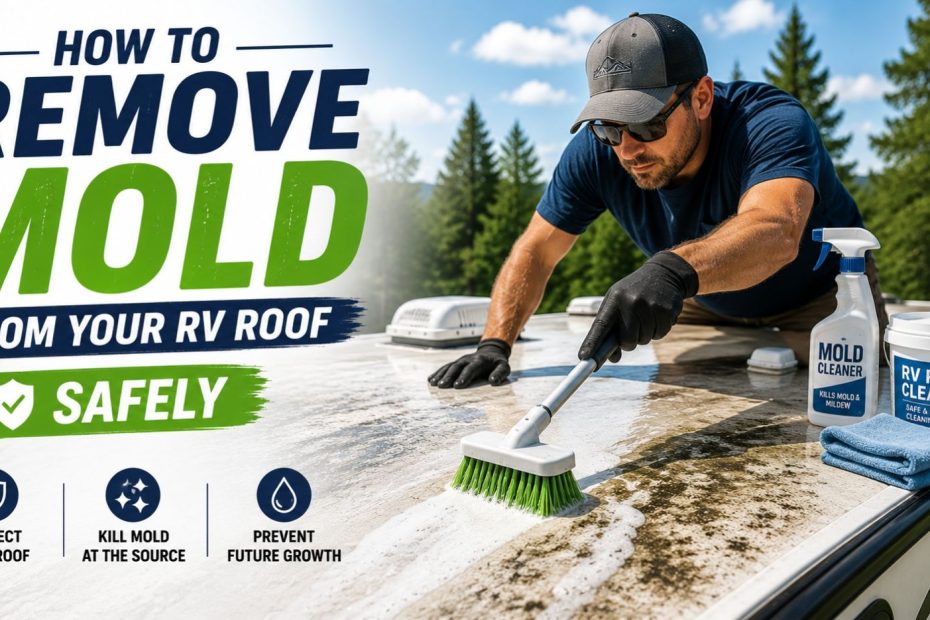
- Rinse the roof first to knock off loose dirt and debris before applying any cleaner.
- Work in sections rather than the whole roof at once, especially in direct sun, so the product doesn’t dry out before you can rinse it.
- Use a soft-bristle brush, never a stiff or wire brush that can scratch or wear down the surface.
- Rinse thoroughly, including down the sides of the RV, to avoid streaking.
- Check the weather – cleaning in extreme heat can cause products to dry too fast and leave residue.
If you’re not sure your roof is in good enough shape to handle regular cleaning yet, it’s worth running through our full RV roof maintenance checklist first, so you know what you’re working with before you start scrubbing.
Does Roof Cleaner Actually Matter That Much?
Short answer: yes, more than most owners expect. A roof that’s covered in dirt and grime holds onto moisture longer after rain, which speeds up wear on sealant and seams. It also makes it much harder to spot a hairline crack or early sign of trouble during a routine inspection, since everything blends into the grime. Regular cleaning isn’t just cosmetic – it’s part of what lets you actually catch small problems while they’re still cheap to fix, rather than finding out about them from a water stain on your ceiling. If you’re not sure how often that inspection should happen, our guide on how often you should reseal an RV roof breaks down a realistic schedule.
Frequently asked questions
What’s the best cleaner for a rubber (EPDM/TPO) RV roof?
Petroleum-free cleaners made specifically for rubber roofs – like Camco, Thetford, Dicor, or Bio-Kleen – are generally the safest bet, since petroleum-based products can dry out and crack rubber membranes over time.
Can I just use Dawn dish soap on my RV roof?
You can, and plenty of owners do, but some dish soaps can strip wax or protective sealant along with the dirt. If you use it, consider reapplying a protectant afterward.
How often should I clean my RV roof?
Most owners aim for a few times a year, with a more thorough clean before and after the main travel season. RVs stored under trees or in dusty areas may need it more often.
Do I need a separate UV protectant after cleaning?
Not always – some cleaners on this list include a built-in protectant layer. If yours doesn’t, applying a separate UV sealant afterward helps extend the life of the roof.
Is it safe to pressure wash an RV roof?
Generally, no. High-pressure water can force its way under seams and sealant, which can actually cause the leaks you’re trying to prevent. A garden hose and a soft brush are usually the safer choice.
Will roof cleaner fix cracked sealant or soft spots?
No – cleaning helps you see problems more clearly, but it won’t repair cracked sealant or a soft, water-damaged spot. Those need to be addressed separately, and soft spots especially are worth having looked at professionally.
Before You Buy
Before you add anything to cart, take two minutes to confirm your RV’s roof material – rubber (EPDM/TPO), fiberglass, or aluminum. Using the wrong cleaner for your roof type can strip protective coatings or dry out the membrane, which shortens the life of the roof rather than protecting it. If you’re not sure what you’re working with, our guide on types of RV roofing materials can help you identify it before you start scrubbing.
Final Thoughts
There’s no single “best” cleaner for every RV – it really comes down to your roof material, how bad the buildup is, and whether you want a cleaner-only product or something that leaves UV protection behind too. Whichever one you pick, the real win isn’t just a shinier roof — it’s catching small problems early, before they turn into the kind of repair bill nobody wants to deal with.
Related reading:
Did this guide help with your rig?

Written by