On this page12 sections
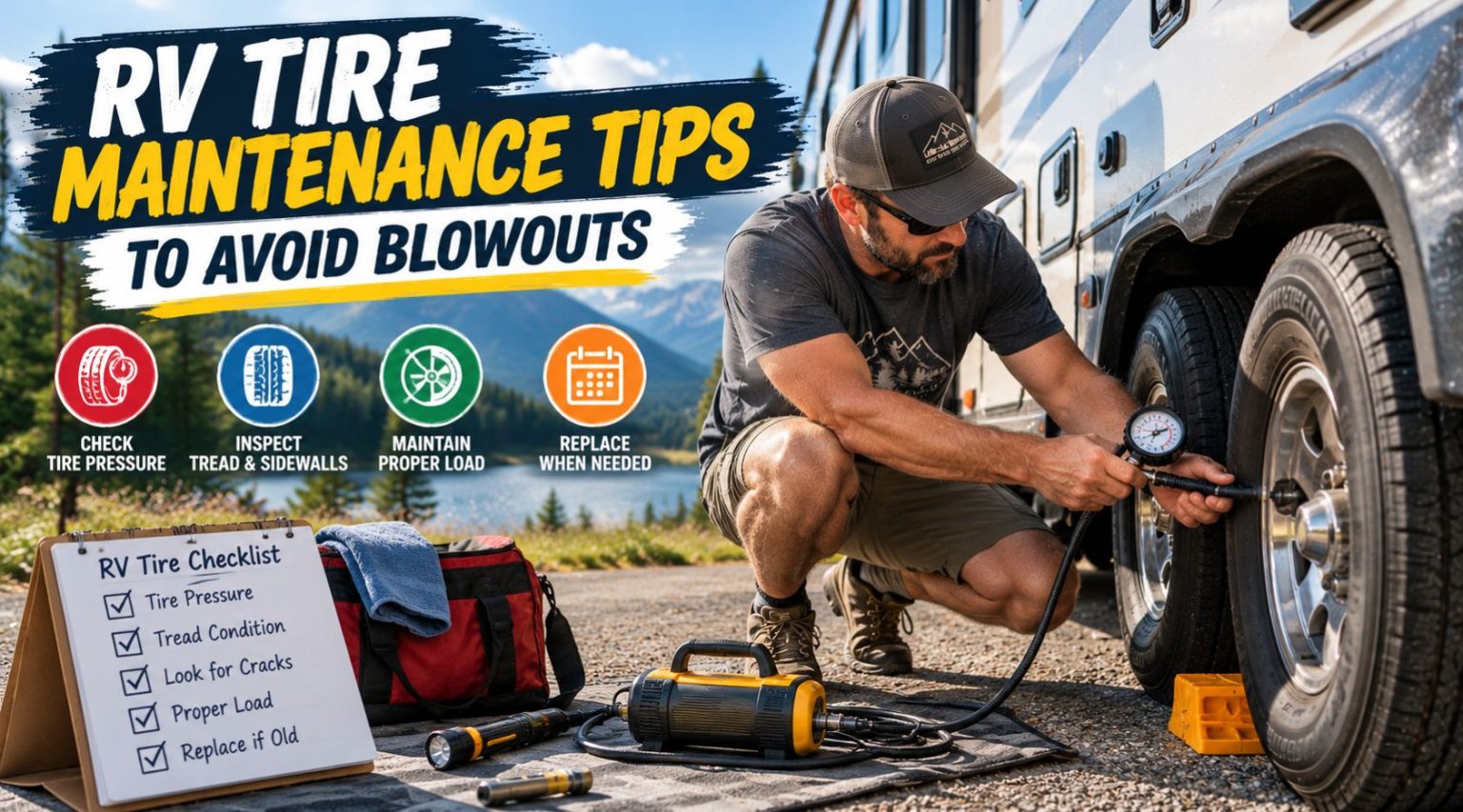
The most effective RV tire maintenance tips to avoid blowouts are checking tire pressure cold before every trip, never exceeding your RV’s load rating, inspecting sidewalls and tread regularly for cracks or bulges, replacing tires every five to seven years regardless of tread depth, and protecting tires from sun exposure with covers during storage. Underinflation and overloading cause the majority of RV tire blowouts, and both are fully preventable with routine checks.
A tire blowout is one of the most dangerous things that can happen while driving an RV, and it’s also one of the most preventable. Unlike a car, an RV carries significant weight on tires that often sit unused for weeks between trips, which creates a unique combination of stress, heat, and slow deterioration that catches a lot of owners off guard. The tires rarely fail without warning. They fail because small, overlooked issues, a few pounds of missing air pressure, a hairline sidewall crack, a tire that’s technically still got tread but is years past its safe service life, finally give out under the stress of a long drive.
Here’s how we approached this guide: we looked at the most commonly cited causes of RV tire blowouts across tire manufacturers, RV safety organizations, and real-world incident patterns, then organized the prevention steps by how much control you actually have over each one.
Why RV Tires Are More Blowout Prone Than Car Tires
RVs carry more weight relative to their tire size than most passenger vehicles, and they’re often driven far less frequently, sometimes sitting parked for weeks or months between trips. That combination matters because tires age and degrade whether they’re being used or not, through UV exposure, ozone, and simple time, not just mileage. A tire that looks fine and still has plenty of tread can still be unsafe if it’s old enough, which is a detail a lot of owners miss since they’re used to judging car tires mostly by tread wear alone.
Tire Pressure: The Single Biggest Factor
Underinflation is the most commonly cited cause behind RV tire blowouts, and it’s also one of the easiest things to prevent. Here’s why it matters so much: an underinflated tire flexes more than it’s designed to with every rotation, which generates excess heat. That heat shifts pressure away from the tread and onto the sidewall, a part of the tire that isn’t built to handle it, and sustained heat and stress on the sidewall is exactly what leads to a blowout.
- Check pressure cold, before driving, since heat from driving temporarily raises the reading and can mask an actual underinflation problem
- Use the pressure listed on your RV’s placard, usually found on the driver’s side door frame, not the maximum pressure printed on the tire’s sidewall
- Check every tire, including the spare, since a spare that’s been sitting unused can lose pressure just like any other tire
- Don’t rely on a visual check alone. RV tires, especially dual configurations, can lose a significant amount of pressure and still look fully inflated
- Consider a tire pressure monitoring system (TPMS), particularly for larger rigs, since it alerts you to a pressure problem in real time while driving rather than after the fact
Don’t Exceed Your RV’s Weight and Load Limits
Every RV has a maximum weight rating, and every tire has its own load rating as well. Exceeding either one puts sustained extra stress on the tires, increasing heat buildup and the risk of failure.
- Weigh your fully loaded RV at a certified scale when possible, including passengers, gear, water, and fuel, since estimated weight is often lower than actual loaded weight
- Check your tire’s individual load rating, not just the RV’s overall weight rating, since uneven loading can overload a single tire even when the total weight seems fine
- Distribute weight evenly across both sides and front to back, since concentrated weight on one side or one axle increases the risk for the tires carrying the extra load
- Avoid carrying unnecessary gear you don’t actually need for the trip, since every extra pound adds to the cumulative load your tires are managing
Inspect Your Tires Regularly, Not Just Before Trips
A tire can look fine from a few feet away and still have a developing problem. A proper inspection means actually getting close and checking:
- Sidewalls for cracking, which often shows up first near the base of the tire and is a sign of age-related deterioration, sometimes called dry rot
- Bulges or blisters, which indicate internal damage and mean the tire needs to be replaced immediately, not monitored
- Tread depth and wear pattern, since uneven wear can point to alignment or inflation problems beyond just the tire itself
- Embedded objects, cuts, or punctures, which can be a slow leak waiting to become a bigger problem
- After hitting a pothole or road debris, stop at the next safe opportunity to check both the affected tire and the one next to it, since debris from a damaged tire can cut an adjacent one
Know Your Tire’s Age, Not Just Its Tread
This is the detail most RV owners miss. Tire manufacturers generally recommend replacement every five to seven years regardless of how much tread remains, since the rubber compound itself degrades with age even on a tire that’s barely been driven. You can find the manufacture date on the tire’s sidewall as a four-digit DOT code: the first two digits are the week and the last two are the year, so a code ending in 0520 means the tire was made in the fifth week of 2020. If you’re buying a used RV or you’re simply not sure how old your tires are, checking this code takes less than a minute and tells you more than a visual inspection alone ever could.
Protect Tires from Sun and Storage Damage
UV exposure and ozone are often called silent tire killers, since they degrade rubber steadily over time even when the RV isn’t moving at all. This matters most during storage, when tires can sit exposed to the sun for weeks or months at a stretch.
- Use tire covers whenever the RV is parked for more than a day or two, especially in sunny climates
- Store indoors when possible, or in a covered area that limits direct sun exposure
- Park on grass or gravel rather than bare asphalt during hot weather when you have the option, since asphalt absorbs and radiates heat back into the tire
- Avoid petroleum-based tire dressings, which can actually accelerate rubber degradation rather than protect it. A dedicated UV protectant is a safer choice for long-term tire care
- Check and maintain pressure even during storage, since tires still lose air gradually while sitting unused
Sun exposure affects more than just your tires. If you’re looking at sun protection for the whole RV rather than just the tires, our guide on how to protect your RV from sun damage covers the roof, seals, and exterior finish as well.
Driving Habits That Affect Tire Health
How you drive has a direct impact on tire temperature and wear, which ties back into blowout risk:
- Avoid sudden acceleration, hard braking, or sharp swerving, all of which generate extra heat and stress on the tires
- Avoid prolonged driving in extreme heat when possible, especially on long stretches without a break, since sustained heat compounds the stress already caused by load and pressure issues
- Rotate tires regularly, typically every 5,000 to 8,000 miles, to promote even wear across the set
- Replace tires in matching sets on the same axle, using identical size, tread, and load index, rather than mixing tire types, which can cause uneven handling and wear
RV Tire Maintenance Checklist
| Task | Frequency |
|---|---|
| Check tire pressure (cold) | Before every trip, and roughly every 2,000 miles while traveling |
| Visual inspection for cracks, bulges, wear | Before every trip |
| Check DOT date code and plan replacement | At least once a year |
| Rotate tires | Every 5,000 to 8,000 miles |
| Replace tires regardless of tread | Every 5 to 7 years |
| Weigh fully loaded RV | Before major trips, or after significant gear changes |
| Apply tire covers during storage | Anytime parked more than a day or two |
Signs You Need to Replace a Tire Right Now
Some issues aren’t worth waiting on. Replace a tire immediately if you notice a visible bulge or blister, a deep sidewall crack, a puncture or embedded object you can’t safely remove and patch, or if the tire has reached or passed the five to seven year age mark regardless of how the tread looks. When in doubt, a trusted tire professional can inspect a tire you’re unsure about before your next trip.
If a Blowout Still Happens
Even with good maintenance, a blowout can still occur, often from road debris or a hazard that no amount of routine care could have prevented. If it happens, stay calm and avoid slamming the brakes. Ease off the accelerator gradually, keep a firm grip on the wheel since the RV may pull toward the affected side, and steer smoothly toward the shoulder once you’ve regained control. Once safely stopped, check the tires on both sides of the axle, since debris from a blown tire can damage the one next to it without being immediately obvious.
Related guides
Frequently asked questions
What’s the number one cause of RV tire blowouts?
Underinflation is the most commonly cited cause. It increases heat and shifts pressure onto the sidewall, which isn’t built to handle that stress, eventually leading to failure.
How often should I check my RV tire pressure?
Check cold pressure before every trip, and recheck roughly every 2,000 miles during longer travel. Tires can lose significant pressure without looking visibly low.
How long do RV tires actually last?
Most manufacturers recommend replacement every five to seven years regardless of tread depth, since the rubber compound degrades with age, not just mileage.
Can an RV tire blow out even with good tread?
Yes. Age-related degradation, underinflation, and overloading can all cause a blowout even on a tire with plenty of visible tread remaining.
Is a tire pressure monitoring system worth it?
For larger RVs especially, yes. A TPMS alerts you to pressure problems in real time while driving, catching issues before they become a blowout rather than after.
How do I know if my RV is overloaded?
The most reliable way is weighing the fully loaded RV, including passengers, gear, water, and fuel, at a certified scale and comparing that to your RV’s rated weight limits and individual tire load ratings.
Final Thoughts
Check your tire pressure and sidewalls this week, even if nothing seems wrong. A five-minute check now is a lot better than finding out about a problem at highway speed.
RV tire blowouts feel sudden when they happen, but they’re almost never random. Pressure, load, age, and sun exposure are all factors well within your control, and consistently managing them is what separates a routine trip from a roadside emergency. None of these habits take much time individually, but together they’re the biggest thing standing between you and one of the most dangerous failures an RV can have on the road.
Did this guide help with your rig?

Written by