On this page13 sections
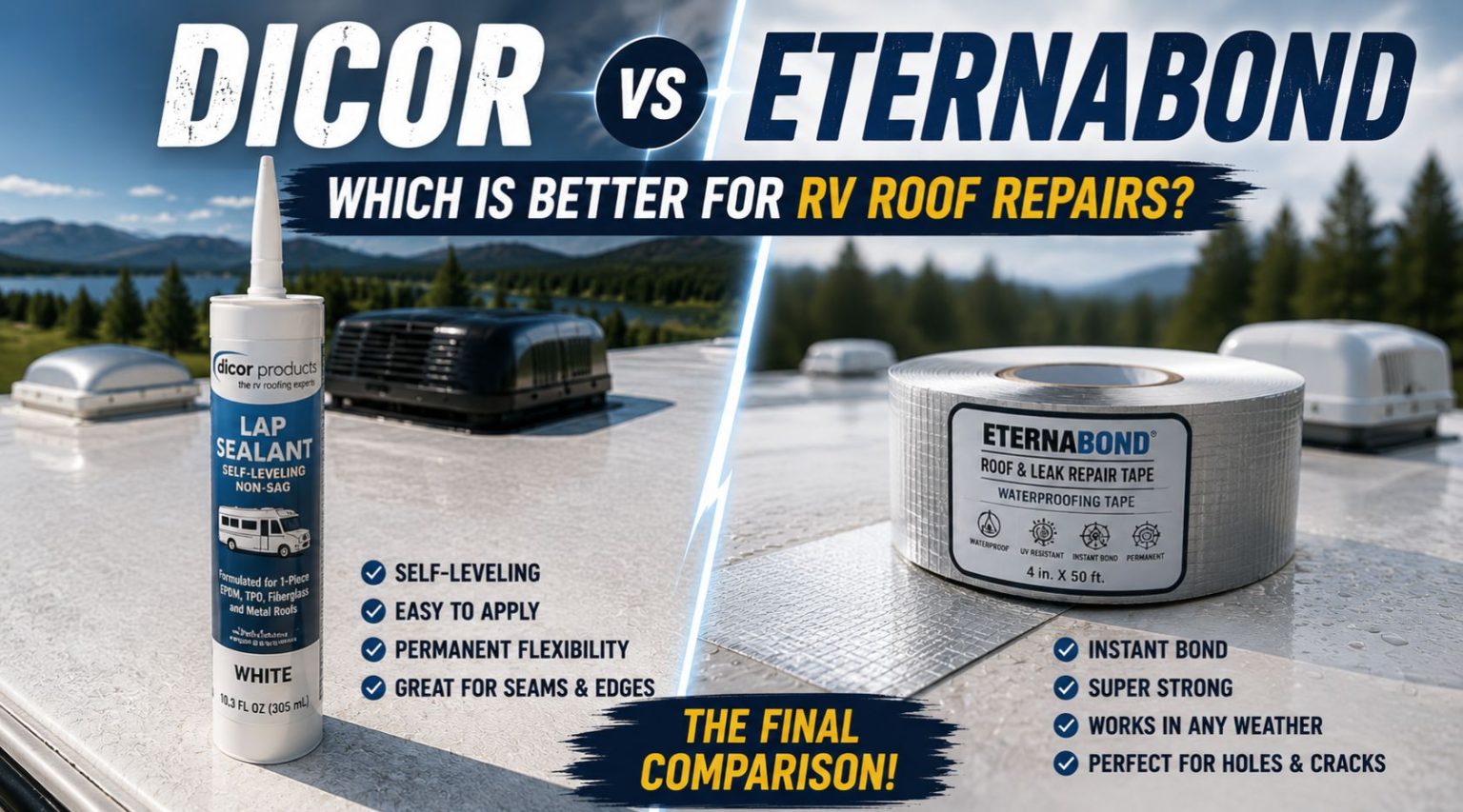
If you’ve spent any time researching RV roof repair, you’ve almost certainly run into the Dicor vs Eternabond debate. Both are trusted names in the RV world, both show up constantly in owner forums, and both have loyal fans who swear by one over the other. The truth is less about which product is “better” overall and more about which one fits the specific repair you’re dealing with.
Here’s how we approached this: we looked at how each product is designed to be used, pulled together patterns from RV owner discussions and long-term use reports, and compared the two head to head across the factors that actually matter when you’re standing on your roof trying to decide what to grab.
What Is Dicor?
Dicor is a lap sealant, essentially a specialized caulk made specifically for RV roofing. It comes in a few forms, most commonly self leveling sealant for horizontal surfaces and non self leveling (sometimes called vertical or non sag) sealant for vent housings, seams on an angle, and other surfaces where a self leveling product would just run off. Dicor is applied wet, spreads or is tooled into place, and then needs time to dry and fully cure, often around 4 hours to be rain resistant and up to 48 hours for a full cure depending on conditions.
Because it starts as a liquid, Dicor is particularly good at filling gaps, cracks, and irregular surfaces. It conforms to whatever shape it’s applied to, which makes it a common choice around vents, antennas, plumbing stacks, and access plates where the surface isn’t flat or uniform.
What Is Eternabond?
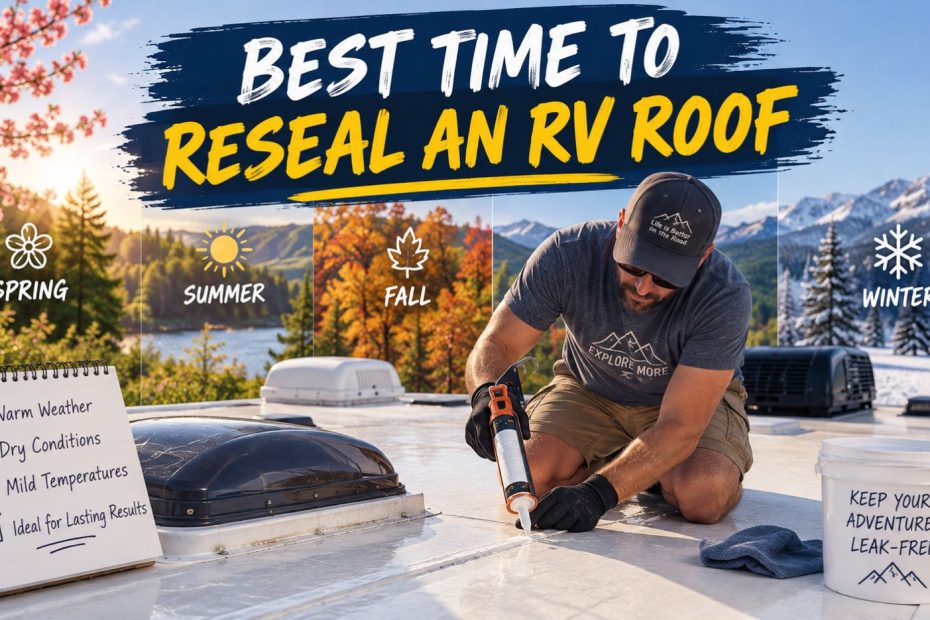
Eternabond is a rubberized, butyl based adhesive tape with a UV resistant top layer. Instead of curing over time like a sealant, it forms a seal the moment it’s applied and pressed down firmly, which is why a lot of RV owners keep a roll in their tool storage for repairs on the road. It comes in various widths, commonly from two inches up to a few feet, so it can be sized to the seam or tear you’re working with.
Eternabond is designed to be applied to a clean, dry, relatively smooth and straight surface. A steel roller or firm hand pressure is typically used after application to fully activate the adhesive and eliminate air pockets underneath, which is important since trapped air or wrinkles can cause the tape to lift over time.
Dicor vs Eternabond: Head to Head Comparison
| Factor | Dicor | Eternabond |
|---|---|---|
| Form | Liquid sealant/caulk | Peel and stick tape |
| Best for | Vents, cracks, irregular surfaces | Straight seams, tears, punctures |
| Application time | Longer, needs curing | Immediate, no cure time |
| Ease of application | Moderate, needs tooling | Easy, but needs careful, wrinkle free placement |
| Longevity reported by owners | Several years, may need reapplication | Often a decade or more when applied correctly |
| Appearance | Blends into the roof surface | Visible tape line, less discreet |
| Works on irregular or curved surfaces | Yes, conforms easily | Difficult, prone to tenting or lifting |
| Good for emergency or roadside repair | Less ideal, needs cure time | Excellent, quick to apply |
| Roof material compatibility | Most types, check product label | Most types, check product label |
Where Dicor Has the Advantage
Irregular surfaces and cracks. Because it starts as a liquid, Dicor fills in gaps and conforms to uneven shapes far more easily than a flat tape can. This makes it the more practical choice around vent bases, antenna mounts, and plumbing stacks.
Touching up existing Dicor. If your roof was originally sealed with Dicor and you’re patching a small crack in otherwise sound sealant, using Dicor again tends to bond more predictably to itself than introducing a different product on top.
A cleaner, less visible finish. Once cured, Dicor blends into the roof surface, which matters if you care about how the roof looks from the ground or want repairs to be less noticeable.
Dicor or Eternabond for this repair?
Five quick questions about the damage and your timing, and you'll know which product to grab.
Our recommendation
Reach for Dicor
Liquid lap sealant fills gaps and conforms to vent bases, antenna mounts and plumbing stacks where flat tape would tent or lift. Use self-leveling on flat areas and non-sag on vertical or angled ones, and let it cure before rain: often about 4 hours to rain resistance and up to 48 for a full cure. Expect to check and touch it up more often than tape.
Our recommendation
Reach for Eternabond
Straight seams, tears and punctures are where tape does best: it bridges the damage and seals as soon as it's pressed down, with no cure time. Clean with a solvent cleaner or isopropyl alcohol, let it dry, then lay it without wrinkles and roll it firmly. Applied that way, owners often report a decade or more of service.
Our recommendation
Use both: Eternabond over Dicor
On high-stress seams, many owners lay Eternabond over existing Dicor as a second layer of defense rather than a replacement. Make sure the Dicor is clean and free of loose material first, then roll the tape down firmly. Keep using Dicor on its own for vents and other irregular detail work.
How your answers stacked up
- Reach for Dicor
- Reach for Eternabond
- Use both: Eternabond over Dicor
Where Eternabond Has the Advantage
Speed. There’s no waiting for it to dry or cure. Press it down, apply pressure with a roller, and the seal is functional right away, which is exactly why so many RV owners keep a roll on hand for repairs while traveling.
Straight seams and long runs. For seams along the roof edge, around the perimeter, or across a flat section, Eternabond applies quickly and evenly, and owners frequently report it holding up for many years without needing to be redone.
Tears and punctures. If a branch or hail has actually torn or punched a hole in the roof membrane, Eternabond’s tape format creates a strong physical bridge over the damage that a liquid sealant alone often can’t match.
Where Each One Tends to Fall Short
Dicor’s downside is mostly about time and reapplication. It needs proper cure time before it’s fully rain resistant, and depending on conditions, sun exposure, and roof material, it may need to be checked and touched up more frequently than a well applied section of tape.
Eternabond’s downside shows up when it’s not applied carefully. RV owners have reported issues with lifted corners, tenting over uneven surfaces or obstructions, and trapped moisture or debris getting underneath when the tape wasn’t pressed down firmly enough or was applied over a surface that wasn’t clean and dry. It’s also more visible once applied, since it doesn’t blend into the roof the way Dicor does.
Can You Use Both Together?
Yes, and many experienced RV owners do exactly that. A common approach is using Dicor for vents, seams around fixtures, and any irregular repair spots, while using Eternabond for long, straight seams like the roof edge or perimeter, or for quick fixes to tears and punctures. Some owners also apply Eternabond over existing Dicor sealant for extra long term protection on seams that see the most stress, treating the tape as a second layer of defense rather than a replacement.
If you’re not sure which approach fits your situation, it often comes down to the shape of the repair: irregular and detailed favors Dicor, straight and wide favors Eternabond.
How to Apply Each Product Correctly
Applying Dicor
- Clean the area thoroughly, removing dirt, old sealant, and debris
- Let the surface dry completely before applying
- Choose self leveling for flat, horizontal areas or non self leveling for vertical or angled surfaces
- Apply in a smooth, even bead, tooling it if needed for full coverage
- Allow it to dry and fully cure before exposing it to rain, checking the product label for exact timing
Applying Eternabond
- Clean the surface with a solvent cleaner or isopropyl alcohol to remove dirt, oils, and chalky residue
- Make sure the surface is completely dry
- Cut the tape to length, leaving extra to overlap edges
- Peel back the liner gradually as you apply, avoiding wrinkles or air pockets
- Press firmly with a hand roller across the entire surface to activate the adhesive and eliminate trapped air
Skipping the cleaning step is one of the most common reasons either product fails early, so don’t rush past it regardless of which one you’re using. For the full roof repair process from start to finish, see our guide on RV roof repair.
RV roof materials estimator
Enter your roof size and what is mounted on it for a rough shopping list of coating, sealant and tape.
A planning estimate, not a quote. Coverage varies widely by product, surface and application thickness, so check each label and buy a little extra.
Cost Comparison
Dicor sealant is generally the more budget friendly option per repair, especially for small touch ups around a single vent or crack, since a tube covers a reasonable amount of area. Eternabond tends to cost more per linear foot, particularly in wider rolls, but RV owners often justify the higher upfront cost with its reported longevity, since a well applied section may not need to be touched again for many years.
What RV Owners Actually Say
Beyond the spec sheet comparisons, it’s worth looking at how these products perform in the real world, since that’s often more telling than manufacturer claims.
Owners who prefer Dicor tend to point to how well it handles detail work: sealing around vent bases, antenna mounts, and access plates where a flat tape simply can’t conform to the shape. Several long-time users also mention that patching a crack in existing Dicor sealant with fresh Dicor tends to bond more predictably than switching products mid-repair.
Owners who prefer Eternabond often bring up longevity on seams, describing sections that have held up for many years with zero re-caulking needed. The trade-off that comes up repeatedly is installation quality: a handful of owners have described tape lifting at the corners or trapping moisture underneath, almost always traced back to incomplete cleaning beforehand or not pressing the tape down firmly enough during application.
The recurring theme across both camps is that neither product is flawless on its own, and most experienced owners eventually settle into using each one for what it does best rather than picking a single favorite for every job.
Which One Should You Choose?
If you’re dealing with a vent, antenna base, or any irregular, detailed area, Dicor is generally the easier and more forgiving choice. If you’re sealing a long, straight seam, patching a tear or puncture, or need an immediate fix before your next trip, Eternabond is usually the better fit. Many RV owners end up keeping both on hand, since the two products solve different problems rather than competing for the exact same job.
Whichever you choose, pairing it with regular inspections makes a bigger difference than the product itself. Our RV roof maintenance checklist walks through what to check and how often, and our guide on how often you should reseal an RV roof can help you figure out a realistic schedule based on your roof material and climate.
Frequently asked questions
Is Dicor or Eternabond better for RV roof leaks?
It depends on the shape of the leak. Dicor works better for cracks and irregular areas like vent bases, while Eternabond is better suited to straight seams, tears, and punctures.
Can I use Eternabond over old Dicor sealant?
Yes, many RV owners do this for extra protection on high stress seams. Just make sure the Dicor surface is clean and free of loose material before applying the tape.
How long does Eternabond tape last on an RV roof?
Reports from long-term users vary, but many describe it lasting a decade or more when applied correctly to a clean, properly prepared surface.
How long does Dicor sealant last before it needs to be redone?
This varies by climate and roof material, but Dicor sealant often needs inspection and possible touch ups every year or two, since UV exposure and temperature cycling gradually wear it down.
Which one is easier for a beginner to apply?
Eternabond is generally considered easier for a first time repair since there’s no mixing, tooling, or cure time involved. Dicor takes a bit more practice to apply smoothly, especially with self leveling formulas.
Can I use Dicor and Eternabond on any roof material?
Both are designed to work across common RV roof materials, including EPDM, TPO, fiberglass, and aluminum, but always check the specific product label, since formulations can vary.
Final Thoughts
Not sure which one your next repair actually needs? Look at the shape of the damage first. A crack, gap, or vent base points to Dicor, while a straight seam, tear, or puncture points to Eternabond.
Dicor and Eternabond aren’t really competitors so much as two different tools built for two different jobs. Keep both in mind rather than picking a permanent favorite, and let the shape and location of the repair guide which one you reach for. Used correctly, and paired with regular roof inspections, either one can keep your RV roof watertight for years to come.
Did this guide help with your rig?

Written by