On this page6 sections
A repair appointment starts before an RV reaches the service bay. A clear description of an intermittent problem gives the technician something more useful than “it sometimes acts up.” You do not need to diagnose the fault yourself. You need a record that separates what happened, when it happened and what equipment was involved.
This is a preparation guide, not a troubleshooting procedure. Do not recreate a dangerous failure to get a better video or remove covers to find identifying information. If a problem affects safe travel, ask the appropriate service provider whether the RV should be driven, towed or left parked.
Start with the identity of the equipment
An RV can contain a chassis, coach systems and appliances from different manufacturers. “The heater” may not identify which manual or service department applies. Record the RV’s year, make and model, then add the affected component’s manufacturer and model when you can read an accessible label safely. Keep serial numbers in the private appointment record rather than posting them publicly.
Manufacturer resources are a better starting point than a manual for a similar-looking rig. Winnebago’s owner-resource page, for example, separates manuals, diagrams and service information. Other brands organize their resources differently. Match the document to your own vehicle or component, and bring the relevant manual or an offline copy with you.
Describe observations before possible causes
Write one short paragraph for each problem. Include the first occurrence, the most recent occurrence and whether the behavior is constant or intermittent. Use exact words from a display when available. A photograph of an error message is more useful than a recollection of “some electrical warning.”
Separate an observation such as “the pump starts briefly while every faucet is closed” from a guess such as “the pump needs replacing.” The guess may turn out to be right, but presenting it as a confirmed diagnosis can obscure other possibilities. Keep any previous professional diagnosis with its date and supporting paperwork.
Record the conditions that were already present
Note ordinary operating conditions you remember: parked or moving, connected to shore power or not, approximate outdoor weather, and which controls were being used. Only include details relevant to the affected system. Do not deliberately switch between power sources or operate suspect equipment to build a more complete log.
For intermittent issues, a few dated observations are usually clearer than a long unstructured message thread. If you do not know a detail, write “unknown.” An honest gap helps the technician distinguish evidence from assumptions.
- What happened: the visible, audible or displayed symptom.
- When: date, approximate time and duration.
- Conditions: the normal circumstances immediately before it appeared.
- What followed: whether it stopped on its own, remained present or was assessed by a professional.
- Evidence: a photo, short recording or relevant invoice.
Make photos easy to understand
Include a wider photograph showing where the issue is located, followed by a closer view if it can be obtained safely. A close-up without context can be difficult to place. Give files simple names tied to the symptom and date. Do not photograph while driving, climb onto the roof or reach near moving, hot or energized equipment for documentation.
Send only the material the service provider requests through its normal channel. Remove unrelated personal documents from the frame. If a recording is long, provide the time at which the symptom appears so the useful evidence is easy to find.
Bring the repair history that changes the picture
Collect recent invoices, parts descriptions and any written diagnosis concerning the same system. Include modifications or accessory installations that preceded the symptom, even if you are unsure whether they are related. Avoid treating timing alone as proof that an earlier repair caused the problem.
Make a separate list of maintenance requests. It keeps a safety concern or active fault from disappearing inside a list of routine jobs. Ask the shop how it wants priorities arranged and whether it services the particular component before making the trip.
Agree on the next communication step
At booking, ask what the appointment includes, what access the shop needs and how additional diagnostic work or repairs will be authorized. Confirm the best contact method and any travel deadline. A deadline is useful planning information, not a guarantee that parts or a repair will be available in time.
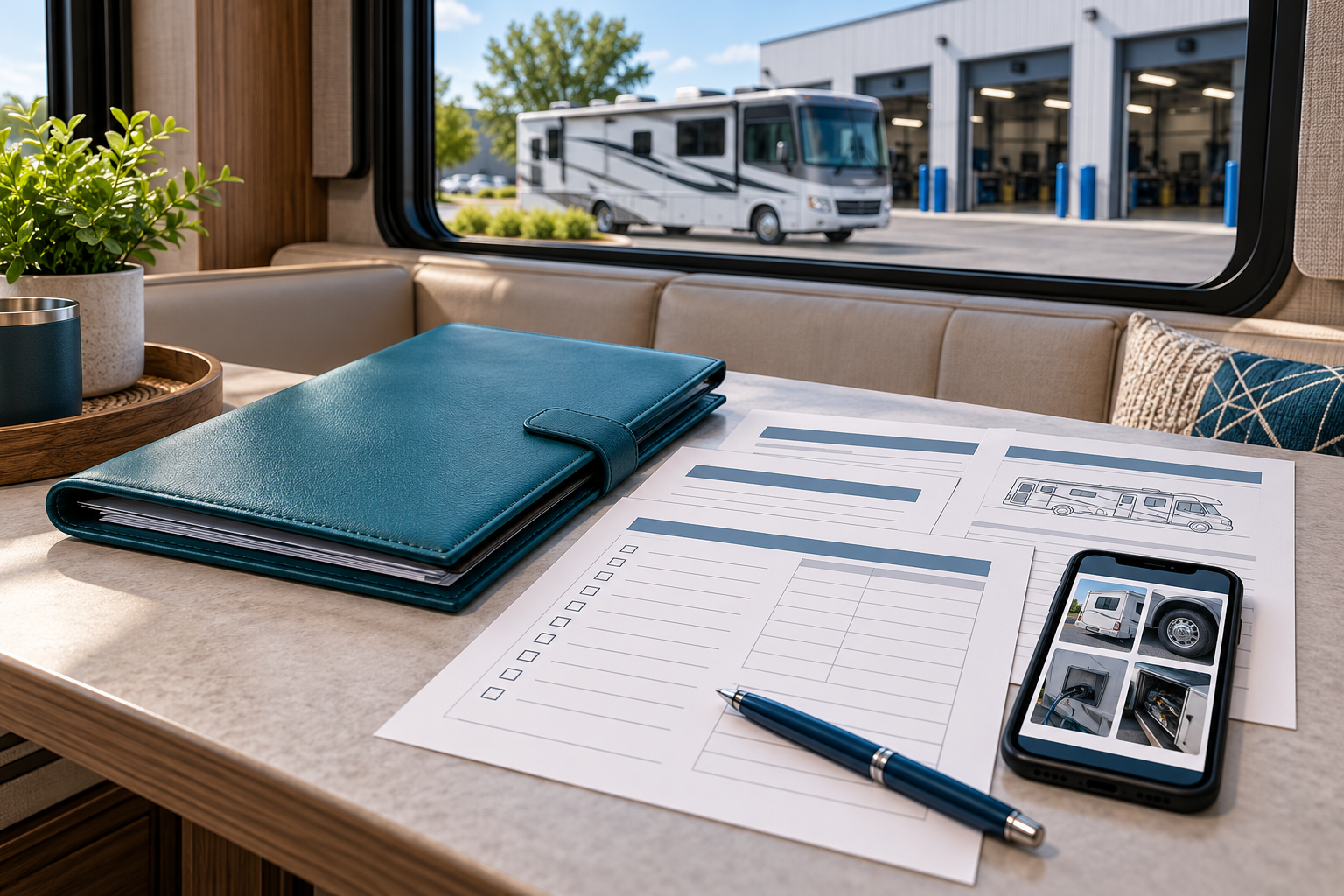
Your finished packet can be small: equipment identification, one page of symptoms, a few labeled photos and relevant service records. Its purpose is to make the first conversation precise. The technician still needs to inspect the RV and reach an independent diagnosis.
Did this guide help with your rig?

Written by